Key Takeaways
- 01
Project management focuses on execution, while project controls focus on measuring project performance and progress. - 02
Project controls monitor costs, schedules, risks, and performance against approved project plans and baselines. - 03
Clear responsibilities help organizations improve accountability, forecasting, governance, and project decision making. - 04
Project managers use project controls data to identify deviations and respond before issues affect project delivery. - 05
PMOs strengthen consistency by establishing common standards for project reporting, governance, monitoring, and performance oversight.
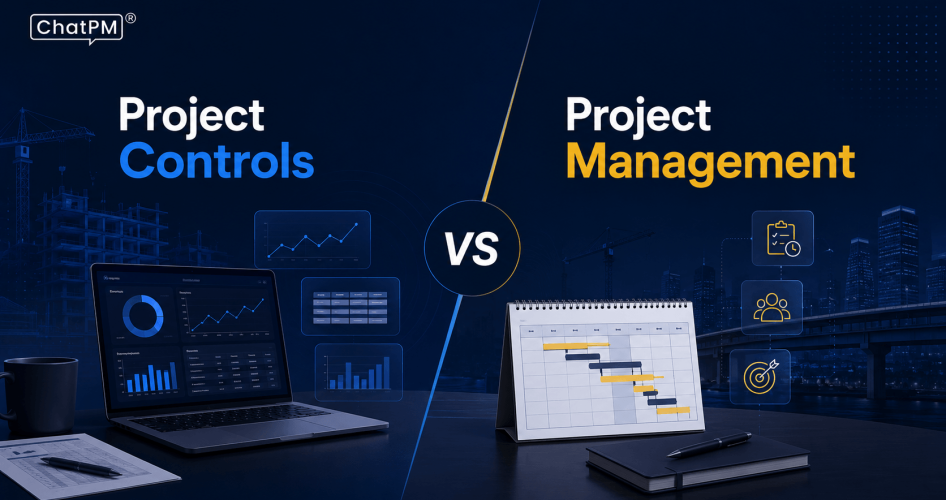
Project Controls vs Project Management can often seem interchangeable because both functions aim to keep projects on track. However, they serve different purposes within project delivery. Project management focuses on execution, people, and decisions, while project controls provide the data needed to monitor performance, costs, schedules, and risks.
Understanding this difference helps organizations assign responsibilities, improve accountability, and strengthen project outcomes. While project managers lead delivery, project controls support better visibility and informed decisions. In this blog, we will explore their key differences, responsibilities, and how both functions work together effectively.
Ready to save 10+ hours every week with AI-powered project management? Book a ChatPM Pro demo and see how AI can automate repetitive tasks, simplify workflows, and give your team more time to focus on high-impact work.
What is Project Management?
Project management is the structured process of planning, executing, monitoring, and completing a project within defined objectives. It brings together people, resources, processes, budgets, timelines, and stakeholder expectations to achieve the desired outcome. Project managers oversee these elements and ensure teams remain aligned throughout the project lifecycle.
The role extends beyond tracking tasks and deadlines. Project managers make decisions, manage communication, resolve issues, coordinate teams, control scope, and respond to changing project requirements. They also work closely with stakeholders to maintain alignment between project goals and business priorities.
Key Responsibilities of Project Management
A project manager typically oversees:
1. Project planning
Defining objectives, deliverables, timelines, resources, and responsibilities.
2. Scope management
Ensuring project work remains aligned with approved requirements.
3. Resource management
Allocating people, budgets, tools, and other resources effectively.
4. Stakeholder management
Maintaining communication with clients, executives, teams, and other stakeholders.
5. Risk management
Identifying potential issues and developing appropriate response strategies.
6. Team coordination
Keeping different teams aligned with project priorities and deadlines.
7. Change management
Evaluating and managing changes that could affect project outcomes.
8. Project delivery
Ensuring the final deliverables meet agreed quality, scope, time, and business expectations.
What are Project Controls?
Project controls are the processes, systems, and practices used to monitor and manage a project’s performance against its approved plans. They provide structured visibility into costs, schedules, resources, risks, and progress. By comparing planned performance with actual results, project controls help teams identify deviations before they create larger delivery problems.
Unlike project management, which focuses broadly on coordinating and delivering the project, project controls concentrate on measurement, analysis, forecasting, and corrective action. They give project managers reliable information to understand where a project stands and what may happen next.
Key Responsibilities of Project Controls
Project controls typically cover several important areas:
1. Cost control
Tracking actual spending against the approved budget and identifying potential cost overruns.
2. Schedule control
Comparing planned progress with actual progress to identify delays and schedule deviations.
3. Performance monitoring
Measuring project progress against established baselines, milestones, and targets.
4. Forecasting
Using current project data to estimate future costs, timelines, and resource requirements.
5. Risk monitoring
Tracking risks that could affect project costs, schedules, resources, or delivery.
6. Reporting
Providing accurate project performance information to managers, stakeholders, and the PMO.
7. Change control
Assessing how approved changes may affect project scope, cost, schedule, and resources.
Project Controls vs Project Management: Key Differences
The difference between Project Controls vs Project Management becomes clearer when their responsibilities, objectives, and decision-making roles are compared. Project management takes a broader view of project delivery, while project controls focus on measuring performance and providing reliable information for corrective decisions. Both functions work together, but their priorities remain distinct.
| Area | Project Management | Project Controls |
|---|---|---|
| Primary focus | Overall project delivery | Project performance and control |
| Main responsibility | Managing scope, teams, resources, and stakeholders | Monitoring cost, schedule, risks, and progress |
| Decision making | Leads project decisions and actions | Provides data and analysis to support decisions |
| Cost | Manages the project budget | Tracks spending and forecasts cost performance |
| Schedule | Plans activities and manages deadlines | Measures progress against the approved schedule |
| Risk | Identifies, evaluates, and manages risks | Monitors risk impact on cost, schedule, and performance |
| Reporting | Communicates overall project status | Produces detailed performance reports and forecasts |
| Change management | Coordinates and implements approved changes | Evaluates their potential impact on project performance |
How do Project Controls and Project Management Work Together?
Project Controls vs Project Management should not be viewed as competing functions. Project management leads execution, while project controls provide the performance insights needed to guide timely and informed decisions.
1. Shared Visibility
Project controls provide accurate data on project progress, costs, and schedules. Project managers use this visibility to identify issues and take corrective action.
2. Cost Control
Project controls track spending against approved budgets and highlight cost variances. Project managers use these insights to adjust resources, priorities, and project activities.
3. Schedule Alignment
Project controls compare planned timelines with actual progress to identify delays. Project managers can then coordinate teams and resources to protect critical deadlines.
4. Risk Response
Project controls monitor how identified risks could affect project performance. Project managers use these findings to prioritize responses and reduce potential project disruption.
5. Better Decisions
Project controls turn project data into meaningful performance insights. Project managers can use these insights to make faster and more informed decisions.
6. Change Management
Project controls assess the cost and schedule impact of proposed changes. Project managers evaluate these findings before approving or coordinating implementation.
Why the Distinction Matters for Organizations?
Understanding Project Controls vs Project Management becomes especially important as projects grow in complexity. Clear responsibilities help organizations avoid duplicated efforts, strengthen accountability, and ensure project leaders receive the right information at the right time.
1. Clear Accountability
Defined responsibilities make it easier to identify who owns specific project activities. This reduces confusion and improves accountability across project teams.
2. Better Forecasting
Project controls provide structured data for forecasting costs, timelines, and performance. Project managers can use these forecasts to prepare for potential project challenges.
3. Early Detection
Regular performance monitoring can reveal deviations before they become major problems. This gives project teams more time to evaluate options and respond effectively.
4. Resource Efficiency
Clear role separation helps organizations use project management and control resources more effectively. Teams can focus on their specific responsibilities without duplicating work.
5. Stronger Governance
Consistent project controls provide measurable information for management and PMO oversight. This supports stronger governance across individual projects and larger project portfolios.
6. Improved Outcomes
Combining strong project leadership with reliable performance information creates better project visibility. Organizations can make informed adjustments while keeping delivery aligned with business objectives.
The Role of PMO in Project Controls and Management
A PMO plays an important role in establishing consistent project management and control practices across an organization. It creates common standards for planning, reporting, governance, and performance monitoring, helping project teams follow a structured approach to delivery.
The PMO can also connect project managers with project controls by establishing reporting requirements and performance standards. This creates greater consistency across projects and gives leadership a clearer view of cost, schedule, risks, resources, and overall project performance.
1. Standardized Processes
A PMO establishes consistent processes for planning, reporting, and monitoring projects. This helps teams follow common practices across different projects and departments.
2. Performance Oversight
PMOs consolidate project information to monitor performance across multiple initiatives. Leaders can use this visibility to identify recurring issues and prioritize corrective action.
3. Governance Support
A PMO defines project governance frameworks, responsibilities, and reporting expectations. This creates greater accountability and ensures projects remain aligned with organizational objectives.
4. Portfolio Visibility
PMOs bring information from individual projects into a broader organizational view. This helps leadership compare priorities, resources, risks, and performance across the project portfolio.
Is Your Organization Managing Projects with the Right Visibility?
Understanding Project Controls vs Project Management helps organizations create clearer responsibilities and stronger project oversight. Project management drives execution, while project controls provide measurable visibility into cost, schedule, performance, and risks. Together, they help project teams make informed decisions, respond to deviations, and maintain better control throughout delivery.
ChatPM brings project management, project controls, reporting, and performance visibility into one connected platform. With centralized project data and intelligent insights, teams can monitor costs, schedules, risks, actions, and progress more effectively.
Frequently Asked Questions
1. What does Project Controls vs Project Management mean for project teams?
Project management leads execution and coordination, while project controls provide performance information covering costs, schedules, risks, and progress.
2. Why are project controls important when managing complex projects?
They provide structured visibility into project performance, helping teams identify deviations, improve forecasting, and respond to potential problems before they become serious.
3. How can project controls improve cost management?
Project controls compare actual spending with approved budgets, identify cost variances, and provide financial insights that support better resource and project decisions.
4. How does schedule control help project teams manage deadlines?
Schedule control compares planned activities with actual progress, helping teams identify delays early and coordinate corrective actions before deadlines are significantly affected.
5. What role does a PMO play in project controls?
A PMO establishes consistent reporting, governance, and monitoring practices, giving leadership greater visibility across projects while supporting standardized project management processes.