Key Takeaways
- 01 Project management focuses on delivering individual projects within defined scope, budget, timelines, and quality standards.
- 02 Project portfolio management aligns multiple initiatives with strategic priorities, resources, risks, and expected business value.
- 03 PM and PPM work together by connecting project execution with broader organizational goals.
- 04 Project KPIs track delivery performance, while PPM metrics measure strategic alignment, portfolio value, and benefits.
- 05 Clear portfolio priorities help organizations balance project delivery, resource capacity, and long-term business objectives.
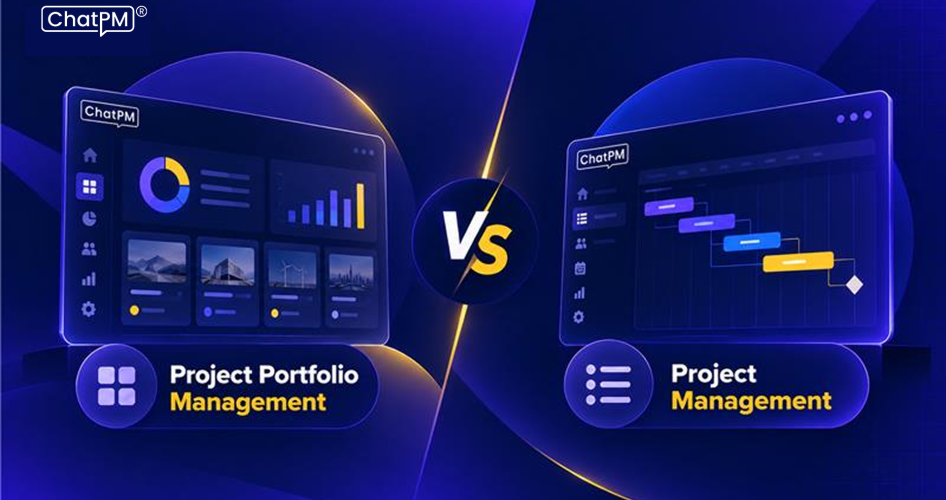
Running multiple projects successfully does not always mean an organization is moving toward its business goals. The difference becomes clearer when comparing project portfolio management vs project management, where one focuses on individual project delivery and the other looks at the bigger strategic picture.
Both approaches play important roles in keeping work organized and aligned. Understanding how they differ can help teams manage resources, priorities, risks, and outcomes more effectively. In this blog, we will compare project portfolio management and project management, their roles, key differences, metrics, and how they work together. Let’s begin!
What is Project Management?
Project management is the process of planning, organizing, and managing the work needed to complete a specific project. It brings together people, resources, timelines, budgets, and tasks to achieve clearly defined project goals. The focus remains on keeping the project structured and moving forward throughout its lifecycle.
A project manager oversees the day-to-day execution and makes sure the team stays aligned with the agreed scope, schedule, and quality requirements. This includes identifying risks, resolving issues, communicating with stakeholders, and managing changes that may affect delivery. Key responsibilities typically include:
1. Defining project scope
Establishing goals, deliverables, requirements, and boundaries.
2. Planning and scheduling
Creating timelines, milestones, and task dependencies.
3. Managing resources
Assigning people, budgets, and other resources effectively.
4. Tracking progress
Monitoring tasks, milestones, costs, and overall project performance.
5. Managing risks
Identifying potential issues and taking action to reduce their impact.
6. Coordinating stakeholders
Keeping teams, clients, and decision-makers informed throughout the project.
What is Project Portfolio Management?
Project portfolio management (PPM) is the process of managing multiple projects and initiatives as a single portfolio to ensure they support an organization’s broader business goals. Instead of looking at one project at a time, PPM gives decision-makers a wider view of priorities, resources, risks, costs, and expected business value.
When comparing project portfolio management vs project management, the main difference is the level of focus. Project management concentrates on delivering an individual project successfully, while PPM helps organizations decide which projects should receive attention, funding, and resources. Key PPM activities include:
1. Prioritizing projects
Evaluating projects based on strategic value, urgency, cost, and expected outcomes.
2. Allocating resources
Balancing people, budgets, and capacity across competing projects.
3. Managing portfolio risks
Identifying risks that could affect multiple projects or broader business objectives.
4. Tracking business value
Reviewing expected benefits, costs, ROI, and strategic contribution.
5. Reviewing project performance
Using portfolio-level data to decide which initiatives should continue, pause, change, or stop.
6. Supporting strategic decisions
Giving leadership a consolidated view of the project portfolio to guide investment and planning.
Project Portfolio vs Project Management: Key Differences
Project management and project portfolio management operate at different levels, but they support the same broader business objectives. Project management focuses on delivering individual projects successfully, while portfolio management looks across projects to determine how they collectively support organizational priorities.
When comparing project portfolio management vs project management, the differences become clearer across scope, goals, decision-making, time horizon, and performance measurement:
1. Scope
Project management focuses on one project, while portfolio management considers multiple projects and initiatives together.
2. Primary goal
Project management aims for successful delivery, while PPM focuses on strategic alignment and business value.
3. Decision-making
Project managers make decisions about tasks, schedules, budgets, and risks. Portfolio managers make decisions about priorities, funding, resources, and project selection.
4. Time horizon
Project management follows a defined project lifecycle, while PPM involves ongoing portfolio reviews as business priorities change.
5. Key stakeholders
Project managers work closely with delivery teams, clients, and project sponsors. Portfolio managers typically work with senior leaders and decision-makers.
6. Success measures
Project management often tracks schedule, cost, scope, quality, and milestones. PPM looks at portfolio value, strategic alignment, resource utilization, and benefits realization.
The two approaches are closely connected. Strong project management helps deliver individual initiatives effectively, while PPM ensures that those initiatives remain aligned with the organization’s wider priorities.
PPM vs PM: Practical Comparison
The easiest way to understand project portfolio vs project management is to look at how each one handles the same business situation. Project management focuses on making an individual project successful, while project portfolio management looks across projects to decide where resources, funding, and attention should be directed.
| Comparison Area | Project Management (PM) | Project Portfolio Management (PPM) |
|---|---|---|
| Primary Focus | Successful delivery of an individual project | Strategic management of multiple projects and initiatives |
| Core Objective | Meet project scope, schedule, budget, and quality requirements | Align investments and resources with business priorities |
| Scope | One project and its deliverables | Multiple projects, programs, and initiatives |
| Key Decisions | Tasks, timelines, resources, risks, and scope changes | Project selection, prioritization, funding, and resource allocation |
| Time Horizon | Defined project lifecycle | Ongoing portfolio planning and review |
| Key Stakeholders | Project team, clients, sponsors, and delivery stakeholders | Executives, PMO leaders, portfolio managers, and business leaders |
| Performance Measures | Schedule, cost, milestones, scope, and quality | Strategic alignment, portfolio value, resource capacity, and benefits |
| Typical Outcome | A completed project that meets its agreed objectives | A balanced portfolio that supports organizational goals |
How do PPM and Project Management Work Together?
Project management and project portfolio management serve different purposes, but they work closely together. Project managers focus on delivering individual projects successfully, while portfolio managers look across projects to ensure resources, funding, and priorities support wider business goals. This connection helps organizations maintain strong execution without losing sight of strategic priorities.
Understanding portfolio management vs project management becomes easier when looking at their relationship. PPM provides direction at the portfolio level, while project management turns those priorities into planned and measurable project outcomes. Both teams need to share accurate information to make better decisions throughout the project lifecycle.
Key ways they work together include:
1. Aligning projects with strategy
PPM helps select projects that support current business priorities.
2. Managing shared resources
Portfolio leaders balance resources across projects based on changing needs.
3. Monitoring project performance
Project managers provide progress, cost, risk, and schedule data for portfolio reviews.
4. Managing cross-project risks
Portfolio management identifies risks or dependencies that may affect multiple projects.
5. Supporting investment decisions
Portfolio-level insights help leaders review funding, priorities, and expected business value.
6. Improving project outcomes
Clear portfolio priorities help project teams focus their efforts on the initiatives that matter most.
What Each One Measures: KPIs for PM vs PPM?
The metrics used in project management and portfolio management reflect their different goals. Project managers mainly track delivery performance, while portfolio managers evaluate the overall value and strategic contribution of multiple initiatives. These measurements help teams identify problems early and support better decisions.
The difference becomes clear when comparing portfolio management vs project management through performance metrics. Project-level KPIs show how well an individual project is progressing, while portfolio-level KPIs show how effectively the organization is investing its resources across projects.
1. Common Project Management KPIs
Schedule performance
Measures whether project activities and milestones are progressing as planned.
Budget performance
Tracks actual spending against the approved project budget.
Scope completion
Shows how much of the agreed project scope has been delivered.
Risk and issue status
Monitors identified risks, active issues, and their potential impact.
Quality performance
Measures whether project deliverables meet defined quality requirements.
2. Common Portfolio Management KPIs
Strategic alignment
Measures how closely projects support organizational priorities and business objectives.
Portfolio value
Evaluates expected benefits, returns, and business contribution across initiatives.
Resource utilization
Shows how effectively people, budgets, and capacity are distributed across projects.
Benefits realization
Tracks whether approved projects are delivering their expected business benefits.
Portfolio risk
Provides a broader view of risks affecting multiple projects or strategic outcomes.
How Can You Balance Project Delivery with Strategic Priorities?
Understanding project portfolio management vs project management helps organizations connect effective project delivery with broader business priorities. Project management keeps individual initiatives on track, while portfolio management guides priorities, resources, risks, and investments across the organization for stronger strategic alignment.
ChatPM brings project planning, tracking, risk management, collaboration, and reporting into one AI-powered project management platform. It helps teams manage projects efficiently while giving decision-makers clearer visibility into performance, priorities, and outcomes across their project portfolio for better strategic planning.