
Key Takeaways
- 01
AI transforms KPIs from static metrics to predictive, outcome-focused indicators. - 02
Project KPIs guide decisions, improve resource use, and detect risks early. - 03
Top AI KPIs track accuracy, automation, risk, ROI, and stakeholder sentiment. - 04
Monitoring KPIs requires dashboards, alerts, reports, feedback, and continuous refinement. - 05
Challenges include data inconsistency, overload, poor sharing, and misinterpreted metrics.
Project environments in 2026 are evolving quickly, and managers need smarter ways to track performance. Project management KPIs are no longer just simple metrics. With the support of AI, they now offer deeper insights into progress, team performance, and potential risks. This helps managers make better decisions without relying only on past data. It also improves planning and keeps projects aligned with business goals.
Modern KPI software helps project managers monitor performance in real time, automate reporting, and generate AI-powered insights for faster and more informed decision-making.
But how do we create a real-time view that truly reflects project performance using AI? In this blog, we will explore the most important AI driven KPIs that help managers track progress more clearly, spot issues early, and make faster decisions. These insights help teams stay focused, improve efficiency, and deliver projects with better results.
Quick Overview of Project Management KPIs Software
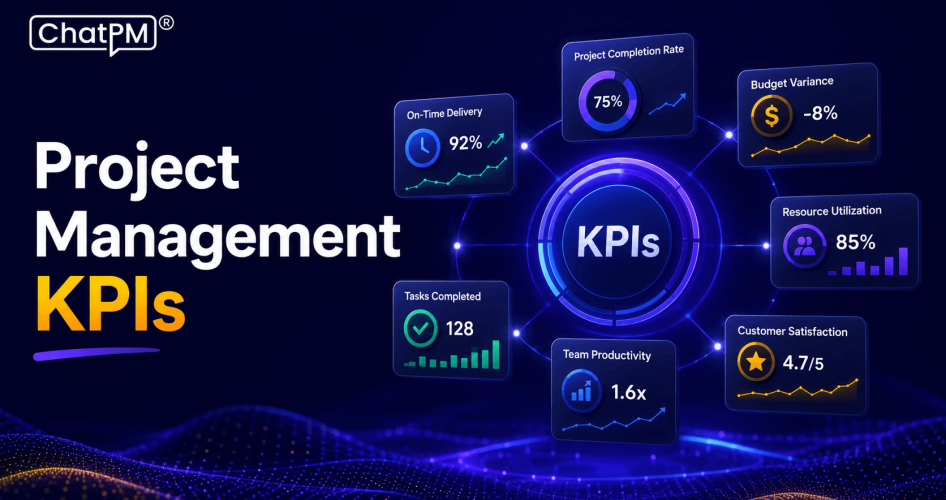
Project management KPIs are measurable indicators that show how well a project achieves its business goals. They go beyond simple data, focusing on results and impact to give managers a clear view of performance and project health.
KPI software centralizes project data, visualizes performance through dashboards, and enables teams to monitor key performance indicators from a single platform.
KPIs help guide decisions and actions throughout a project. They highlight areas that need adjustment, support strategic planning, and ensure projects stay aligned with goals. Unlike metrics, which show the past, KPIs shape the outcomes and success of what comes next.
Why KPIs Matters for Project Success?
AI-powered KPI software helps organizations detect risks early, improve resource utilization, and align project performance with business objectives.
1. Early risk detection: Spot issues before they escalate.
2. Better resource use: Balance team workload efficiently.
Informed decision-making: Guide timely project adjustments.
Stakeholder confidence: Build trust with transparent reporting.
The Growing Role of AI KPIs Software
Artificial Intelligence (AI) has changed the way we are tracked and understood. Instead of relying on static numbers, AI allows managers to see patterns, predict risks, and make smarter decisions. This shift is helping teams move from just recording past results to actively improving project outcomes.
AI entered project management by integrating with tools and platforms that teams already use. These integrations allow real-time tracking of tasks, deadlines, and resources, giving managers immediate visibility into potential issues before they impact the project.
Today, AI focuses on outcomes rather than just activity. It helps measure value delivered, risk reduction, and efficiency improvements, aligning project efforts directly with business goals. This makes project tracking smarter, faster, and more closely tied to overall success.
Key Benefits at a Glance
1. Automates tracking for accurate progress and fewer errors
2. Predicts risks early to prevent issues
3. Provides real-time insights for better decisions
4. Improves ROI by aligning projects with goals
5. Optimizes resources and reduces waste
6. Offers actionable KPIs to boost performance
Top AI KPI Software Metrics to Track in 2026
In 2026, project management relies more on AI than ever. AI project tracking metrics help teams measure performance clearly. They show trends, track progress, and make it easier to focus on what matters most.
1. Prediction Accuracy Rate
This KPI evaluates how effectively AI forecasts timelines, budgets, and resource needs compared to actual outcomes. It helps project managers rely on data rather than guesswork. Accurate predictions are one of the most important KPIs for project managers in AI‑driven projects.
2. Process Automation Rate
This measures the percentage of repetitive project tasks that AI handles autonomously, such as reporting and documentation. Higher automation rates free up time for strategic work that requires human judgment. It shows how much of the administrative workload AI has taken off project teams.
3. Cycle‑Time Reduction
This indicator tracks the decrease in time needed to complete important workflows after AI was implemented. It reveals whether AI is helping teams finish tasks faster than before. A consistent reduction in cycle time speaks to improved operational efficiency.
4. Proactive Risk Identification Rate
This KPI compares how many risks AI detects before they impact the project versus those found reactively by the team. It highlights AI’s ability to provide early warnings that protect project health. A higher rate means risks are identified earlier and mitigation can begin sooner.
5. Return on AI Investment (ROAI)
ROAI measures the financial gain from AI compared to costs like licenses, training, and infrastructure. It helps organizations justify AI investments and demonstrate tangible benefits. Tracking ROAI is an essential part of evaluating overall project management KPIsin modern projects.
6. AI Suggestion Acceptance Rate
This measures how often team members implement AI‑generated recommendations or prioritization suggestions. A higher acceptance rate indicates that project teams trust and find value in AI guidance. Low acceptance means the AI outputs may need better integration or clearer context.
7. Resource Utilization Optimization
This KPI tracks how efficiently team members and other resources are allocated with the help of AI tools. Good optimization prevents overload and balances workloads, helping teams stay productive. It also reduces waste from under‑utilized skills and capacity.
8. Quality Error Rate (AI‑Assisted)
This monitors the frequency of defects or rework in deliverables that were influenced by AI assistance. Lower error rates mean AI is helping improve output quality rather than just speed. This KPI ensures AI contributions enhance work rather than introduce mistakes.
9. Stakeholder Sentiment Score
This uses AI sentiment analysis on communications to gauge stakeholder confidence and alignment in real time. It captures how clients and executives feel about project direction without waiting for formal surveys. Improving sentiment scores reflects clearer communication and better perceived project health.
10. Time‑to‑Value (TTV) Acceleration
This measures how much faster a project delivers value due to AI shortening development and launch cycles. It shows whether AI is helping teams realize business outcomes sooner than traditional methods. A faster time‑to‑value means organizations benefit earlier from their initiatives.
Monitoring AI Project Management KPIs Software Over Time
If you already understand the importance of KPIs, you know they’re only valuable when tracked consistently. Here are the key steps and best practices to monitor AI project management KPIs over time for better insights and smarter decisions.
1. Dashboards for Real-Time KPI Visibility
Dashboards provide instant insights into AI performance. Teams can quickly spot trends and detect anomalies. They ensure AI contributes measurable value to project outcomes.
2. Automated Alerts for KPI Deviations
AI systems can trigger alerts when key metrics exceed limits. Teams are notified of drops in accuracy or potential biases immediately. Alerts allow timely intervention before issues affect project outcomes.
3. Reports for Tracking Long-Term Performance
Weekly and monthly reports capture AI KPI trends over time. Managers can assess prediction accuracy, cost efficiency, and operational impact. Reports help ensure AI continues to support strategic goals.
4. Stakeholder Feedback for AI Validation
Qualitative feedback complements quantitative KPIs. Teams and stakeholders highlight misaligned AI decisions or overlooked risks. This ensures AI solutions truly meet business needs.
5. Continuous Audits and KPI Refinement
Regular audits verify AI accuracy and reliability over time. Models are retrained using updated data and insights. Continuous refinement keeps AI aligned with business objectives and project goals.
Challenges to Watch Out For:
1. Inconsistent Data Collection – Gathering accurate and complete project metrics can be difficult without standardized processes.
2. Overwhelming Information – Too many metrics or excessive details can make insights confusing and hard to act on.
3. Ineffective Sharing – Presenting data in a way stakeholders understand is often challenging and time-consuming.
4. Misinterpreting Metrics – Numbers can be misleading if context, correlation, or causation isn’t considered carefully.
Unlocking the Full Potential of AI with KPI Software
Project performance depends on clear, real-time KPIs. AI-driven metrics help managers predict risks and optimize resources. Dashboards, reports, and alerts give a full view of project health. This helps teams make informed decisions and improve project outcomes efficiently.
ChatPM combines Power BI with ChatGPT analytics. It tracks project KPIs, highlights trends, and provides actionable insights. Managers can visualize data clearly and make faster decisions. ChatPM ensures teams stay aligned, proactive, and fully informed throughout the project lifecycle.
Schedule Your Demo