
Key Takeaways
- 01
SWOT analysis gives project managers a clear view of internal and external project factors. - 02
Identifying weaknesses and threats early helps teams prepare and prevent costly project disruptions. - 03
Recognizing core strengths allows managers to use them strategically for better project outcomes. - 04
SWOT analysis improves team alignment by encouraging open communication among all stakeholders. - 05
Real world SWOT examples show how structured evaluation supports smarter planning across industries.
Project management requires clarity, self-awareness, and strong decision-making at every stage. A structured evaluation helps professionals understand their current position and plan their next steps with confidence. SWOT analysis provides a practical framework to assess internal capabilities and external influences, supporting better leadership and more reliable project outcomes.
Project managers work in environments where priorities shift, expectations rise, and challenges evolve constantly. Regular reflection helps maintain control and direction amid this complexity. By identifying strengths, addressing weaknesses, managing risks, and spotting opportunities, managers can act with purpose. In this blog, we will explore this approach with real examples.
Looking to eliminate project chaos without adding complexity? ChatPM’s hands-on project management service ensures clear processes, seamless teamwork, and steady progress.
What is SWOT Analysis in Project Management?
A SWOT analysis in project management is a structured way to evaluate the internal and external factors that influence a project. It examines strengths and weaknesses within the team or process, while also considering opportunities and threats from the surrounding environment to support informed planning and decision-making.
By applying a project management SWOT analysis, teams gain clearer visibility into potential risks, priority areas, and improvement opportunities. This approach helps align stakeholders, anticipate challenges early, and develop practical strategies that increase the chances of meeting project goals successfully and delivering consistent, measurable results.
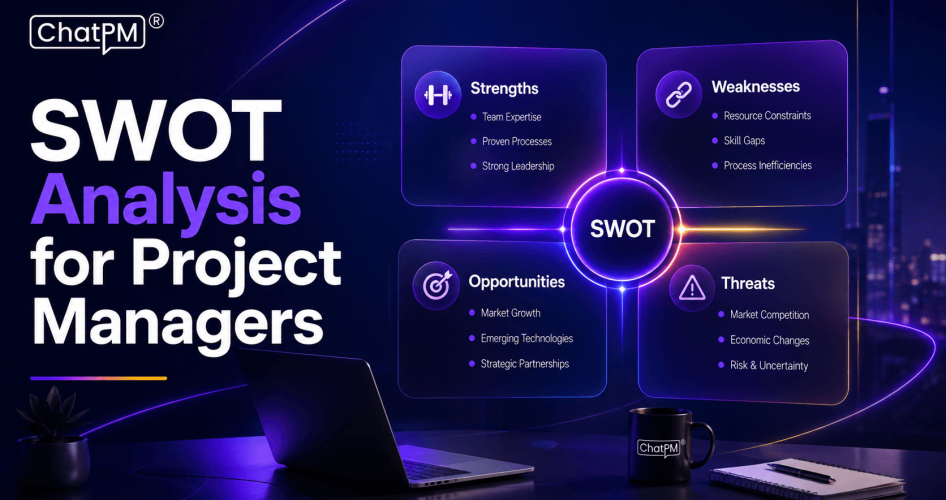
SWOT Analysis Framework: Strengths, Weaknesses, Opportunities & Threats
1. Strengths (S)
Internal capabilities that help the business perform effectively and stand out from competitors. These may include skilled teams, reliable processes, or strong internal systems.
2. Weaknesses (W)
Internal limitations that can slow progress or affect quality. Identifying these areas supports improvement and better control over outcomes.
3. Opportunities (O)
External conditions that create chances for growth, innovation, or expansion. Recognizing them allows teams to act early and gain advantages.
4. Threats (T)
External risks that could disrupt plans or performance. Understanding these challenges helps teams prepare responses and protect results.
Must Read: Manufacturing Project Management
Benefits of SWOT Analysis for Project Management
A structured evaluation method helps project managers understand internal strengths and external challenges before making critical decisions. Here are the key benefits of using SWOT analysis in project management.
1. Clear Project Visibility
This approach gives project managers a complete view of both internal conditions and external influences. By looking at positives and challenges together, teams gain a clearer understanding of the project’s real position before moving forward.
2. Early Risk Awareness
A SWOT analysis helps uncover potential issues at an early stage. Identifying weaknesses and threats in advance allows managers to prepare backup plans, reduce surprises, and maintain control over timelines and outcomes.
3. Stronger Decision Support
With a structured overview of key factors, leaders can make more confident choices around scope, priorities, and schedules. Decisions become grounded in analysis rather than assumptions, improving overall project stability.
4. Leveraging Core Strengths
This method highlights what the team or organization does best, such as skills, tools, or processes. Recognizing these strengths makes it easier to use them strategically and increase the project’s overall value.
5. Improved Team Alignment
The discussion process encourages open communication among stakeholders. When everyone understands priorities, risks, and opportunities, collaboration improves and project goals remain clearly aligned.
6. Smarter Resource Planning
Insights from a SWOT analysis guide managers on where to invest time, budget, and effort. Resources can be directed toward high-impact areas while addressing gaps that may otherwise slow progress.
Wondering how AI can help you address your project’s weaknesses or threats more effectively? Discover our comprehensive list of AI project management tools that can streamline your projects.
SWOT Analysis Examples for Different Projects
A clear framework helps teams understand real project conditions before decisions are made. These project SWOT Analysis examples show how different initiatives can be evaluated using practical, real-world factors that influence delivery, risk, and outcomes.
1. Website Redesign and Migration Project
Strong leadership support, a full content team, and clear specifications provide a stable project foundation. New client leadership, unfamiliar team dynamics, and potential software bugs increase delivery and competitive risks.
2. New Software Product Launch
Experienced developers and patented technology strengthen confidence in successful product delivery. Tight deadlines, regulatory compliance needs, and aggressive competitors create significant launch pressure.
3. Internal IT Infrastructure Upgrade
Internal expertise and leadership commitment support a smooth transition to modern systems. Limited budgets, shared resources, and cybersecurity risks require careful execution planning.
4. Non-Profit Fundraising Campaign
A clear mission, trusted brand, and experienced volunteers drive donor engagement. Outdated systems and economic uncertainty challenge fundraising despite growing digital giving trends.
5. Manufacturing Facility Expansion
Reliable suppliers and advanced automation improve efficiency and production scalability. Rising material costs and geopolitical disruptions threaten timelines and supply stability.
Struggling to keep all your project tasks organized while meeting tight deadlines? Discover how project management automation can simplify task tracking and improve team productivity.
Ready to Apply SWOT Thinking to Your Next Project?
A structured evaluation approach helps project managers gain clarity, reduce uncertainty, and plan with confidence. When applied consistently, SWOT analysis supports better decisions, stronger alignment, and improved outcomes across diverse initiatives. It transforms observations into actionable insights, enabling teams to anticipate risks, leverage strengths, and adapt effectively in dynamic project environments.
Turning insights into action requires the right support system. ChatPM enhances project planning by connecting SWOT analysis with real-time data, risk signals, and execution insights. It helps teams apply learnings from evaluation frameworks directly into workflows, ensuring smarter decisions, better collaboration, and more predictable delivery across every project stage.