
Key Takeaways
- 01
Order management software centralizes procurement, fulfillment, and inventory in one system. As a result, teams can manage order activities more efficiently. - 02
Real-time inventory visibility helps project teams avoid material shortages and delays. Therefore, teams can plan resources with greater confidence. - 03
Automation reduces manual errors and keeps order fulfillment on schedule. In addition, it allows teams to spend less time on repetitive tasks. - 04
Integrating order systems with project workflows improves coordination across departments. This connection also keeps order and project information aligned. - 05
Data-driven insights from order management support smarter planning and better decisions. Consequently, project teams can respond to operational changes more effectively.
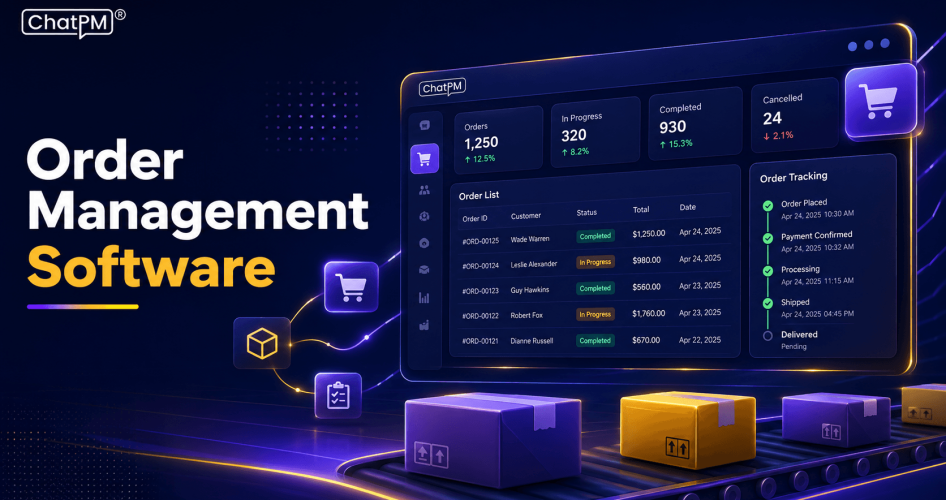
Every successful operation depends on how efficiently orders are handled from the first request to final delivery. Order management software provides a structured way to capture, process, and track orders accurately. It also reduces manual effort and minimizes errors. As a result, sales, inventory, and fulfillment teams can coordinate more effectively.
When order processes align with project workflows, teams gain better visibility and control over timelines and resources. This connection also improves coordination across departments. In this blog, we explore the key features, benefits, and integration approaches of order management system software that can strengthen overall business efficiency.
Ready to simplify project management and keep your team on track? ChatPM offers a smart Project Management Chatbot that organizes tasks, deadlines, and team communication effortlessly.
What is Order Management Software in Project Management?
Order management software helps businesses control inventory, sales, and fulfillment from a single system. It gives teams a clear view of stock availability and supports accurate order processing. As a result, customers can receive reliable information before purchasing. This structured approach also reduces errors across multiple sales channels.
Beyond inventory visibility, an order management solution coordinates the complete order lifecycle from sourcing to delivery. It connects systems, manages exceptions, and supports faster decisions during demand spikes. When aligned with project order management, it also improves planning, accountability, and execution across teams handling complex operational workflows.
Key Features of Order Management System
Project success depends on timely access to materials, resources, and services. Order management software helps project teams plan, track, and control orders throughout the project lifecycle. By aligning procurement with schedules and budgets, these systems can reduce delays. They also improve coordination between teams and vendors.
1. Centralized Order Control
Manage all project-related orders from a single system using order management software. This keeps procurement, delivery, and execution aligned with project timelines. As a result, teams can reduce unnecessary follow-ups.
2. Real-Time Inventory Visibility
Track materials and resources across different locations to avoid delays and shortages. Accurate inventory information supports better project planning and scheduling. Therefore, teams can identify resource gaps earlier.
3. Automated Order Routing
Orders are routed to the right supplier or warehouse based on availability and project needs. This helps ensure timely fulfillment without disrupting project workflows. In addition, GPT order processing software can help teams interpret order information and automate routine processing tasks. As a result, teams can respond faster to changing project requirements.
4. Fulfillment and Delivery Tracking
Monitor shipments and delivery status in real time to keep projects on schedule. Teams can also gain clear visibility into incoming resources. Therefore, project managers can respond more quickly when delivery issues occur.
5. Returns and Adjustments Management
Handle order changes, returns, and replacements smoothly during project execution. This reduces downtime and gives teams greater flexibility. As a result, unexpected order changes are less likely to disrupt project delivery.
6. Project Performance Insights
Analyze order status, costs, and fulfillment efficiency to support informed decisions. These insights strengthen planning and control through order management software. In addition, teams can identify areas that require attention before they affect project performance.
Ready to Simplify Order Management?
Connect orders, project workflows, tasks, and team collaboration in one platform. Start using ChatPM and see how a connected workflow can reduce manual tracking and improve project visibility.
Key Benefits of Order Management System
In project-driven environments, efficient order management is essential for meeting timelines and controlling costs. An order management software can support better planning, coordination, and project execution. Below are the key benefits for project-focused teams.
1. Centralized Project Control
Orders, suppliers, and fulfillment activities can be managed from one system. This improves coordination and reduces manual follow-ups. In addition, centralized control improves accountability across teams. As a result, businesses can reduce operational overhead and improve project efficiency.
2. Faster and Reliable Fulfillment
Automated picking, packing, and shipping processes support timely delivery of project materials. They also help reduce errors during fulfillment. Therefore, teams can improve their ability to meet project deadlines. This is where order management automation can directly support project schedules.
3. Better Decision Making with Data
Detailed reporting provides insights into order status, costs, and performance trends. Project managers can use this information to forecast needs more accurately. They can also plan resources with greater confidence. Consequently, data-backed decisions can reduce uncertainty throughout the project lifecycle.
4. Improved Stakeholder Experience
Accurate order updates keep internal teams, vendors, and customers informed at every stage. Clear communication builds trust and reduces confusion during project execution. Furthermore, greater transparency can strengthen long-term business relationships.
5. Efficient Returns and Adjustments
Order changes, returns, and replacements can be handled without disrupting the project flow. This flexibility helps teams adapt to scope changes and unexpected requirements. As a result, efficient order adjustments can minimize delays and cost overruns.
6. Scalable Project Operations
Automation allows projects to handle increasing order volumes without adding unnecessary complexity. Teams can scale operations while maintaining control and consistency. Therefore, order management software can support growing project demands more efficiently.
Integration of Order Management Software with Project Management Workflows
Integrating order management systems with project workflows keeps orders, inventory, and timelines aligned. This connection improves coordination and reduces delays. As a result, teams can manage project execution more smoothly.
1. Integration reduces manual work by automatically syncing orders with project tasks and timelines. Therefore, teams can improve accuracy while saving time.
2. A unified data flow keeps sales, operations, and project teams aligned from order creation to delivery. As a result, everyone can work with consistent information.
3. Real-time updates keep inventory and shipping information current. Consequently, teams can make faster decisions and support smoother project execution.
4. Project managers gain clear visibility into order status within their workflow tools. This helps teams keep schedules on track using order management software.
5. Better access to order and inventory data improves resource planning and forecasting. Therefore, teams can prepare for project needs in advance.
6. Automated connections support scalability by handling growing order volumes efficiently. With order management software, projects can remain controlled and predictable as demand increases.
Ready to Streamline Projects with Confidence?
Effective order management software brings clarity, control, and alignment to project-driven operations. It connects fulfillment and workflows in a single system, which helps reduce delays and improve execution. When orders move in sync with project plans, teams can deliver faster and manage costs more effectively. Ultimately, this supports more consistent and predictable project outcomes.
ChatPM is designed to support structured project execution by aligning order flows with planning and delivery milestones. With clear visibility, automation, and real-time insights, it helps teams stay coordinated and efficient. In addition, ChatPM supports smarter decisions and scalable project operations.