Key Takeaways
- 01
AI continuously monitors project data to identify warning signals before they become major risks. - 02
Project health dashboards give managers centralized visibility into schedules, budgets, resources, risks, and KPIs. - 03
AI detects unusual patterns across project metrics and highlights areas requiring immediate attention. - 04
Predictive insights help project teams identify delays, resource bottlenecks, cost changes, and recurring issues earlier. - 05
AI powered monitoring supports proactive decisions, reduces manual reporting, and improves overall project visibility.
Project managers need clear visibility to keep projects on track, yet traditional monitoring often identifies problems after they affect timelines or budgets. AI Project Health Monitoring changes this approach by continuously analyzing project data, identifying unusual patterns, and highlighting early warning signals before minor issues develop into significant project risks.
AI-driven project health assessment helps teams understand project performance through real-time insights and intelligent analysis. It can track key indicators, identify emerging concerns, and support faster decisions without relying entirely on manual reporting. In this blog, we explore how AI can transform project health monitoring and risk detection.
What is AI Project Health Monitoring?
AI Project Health Monitoring is the use of artificial intelligence to continuously evaluate project performance, identify warning signals, and highlight areas that need attention. It analyzes project data across schedules, budgets, resources, tasks, risks, and deliverables to provide a clearer view of overall project health.
Unlike traditional monitoring, AI can identify patterns across different project metrics and detect changes that may indicate future problems. Project managers can receive timely insights about delays, resource constraints, cost changes, or growing risks, helping them take action before these issues significantly affect project outcomes.
AI project health monitoring also reduces the effort required to review large amounts of project information manually. By bringing relevant insights together, it helps project teams focus on important decisions instead of spending excessive time collecting and interpreting data.
Why Traditional Project Health Monitoring Falls Short?
Traditional project monitoring depends heavily on manual updates, periodic reviews, and reports from different project systems. While these methods provide useful information, they can make it difficult for project managers to identify developing problems early.
| Traditional Project Monitoring | AI Project Health Monitoring |
|---|---|
| Relies heavily on manual data collection | Continuously analyzes project data |
| Focuses mainly on current project status | Identifies patterns and potential future issues |
| Reviews often happen at fixed intervals | Monitoring can happen continuously |
| Issues may be identified after delays occur | Early warning signals can be detected sooner |
| Requires teams to interpret multiple reports | AI brings important insights together |
| Mostly supports reactive decisions | Supports proactive project decisions |
Benefits of AI-Powered Project Monitoring Software
AI powered project monitoring software helps project teams move from reactive tracking to proactive project management. By continuously analyzing project information, it can improve visibility and help managers respond to issues earlier.
Key benefits include:
1. Earlier risk detection
Identifies warning signals before they develop into larger project problems.
2. Faster decision making
Provides relevant insights quickly, helping managers respond to changing conditions.
3. Better resource planning
Highlights workload imbalances and potential resource constraints.
4. Improved project visibility
Brings important performance information into a centralized view.
5. Reduced manual reporting
Automates data analysis and reduces the effort required for routine monitoring.
6. Stronger KPI tracking
Continuously evaluates important project metrics against planned targets.
7. Proactive management
Helps teams address emerging concerns before they significantly affect delivery.
These benefits make AI useful for projects where conditions can change frequently. With continuous monitoring and timely insights, project managers can maintain better control over schedules, costs, resources, and risks throughout the project lifecycle.
How AI Monitors Project Health in Real Time?
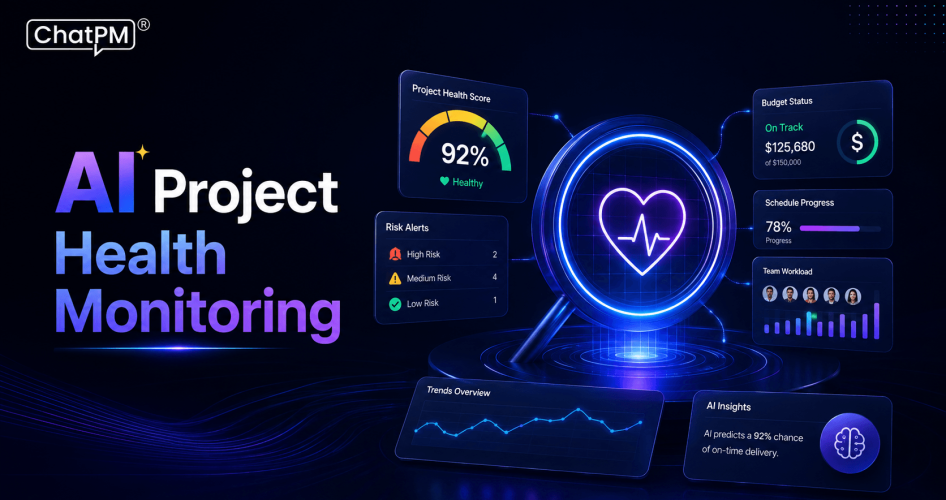
A project health dashboard gives project managers a centralized view of important project information. When AI powers this dashboard, it can continuously evaluate project data and highlight changes that may require attention.
AI monitors project health through several connected activities:
1. Data collection
AI gathers information from tasks, schedules, budgets, resources, risks, and project updates.
2. Performance analysis
It compares current project performance with planned targets and previous project trends.
3. Pattern detection
AI identifies unusual changes that may indicate delays, cost increases, workload issues, or other concerns.
4. Real time alerts
The system can highlight significant deviations and notify teams before problems become harder to manage.
5. Risk prediction
AI can use existing project patterns to identify conditions that could create future risks.
6. Actionable insights
Instead of presenting raw data, AI helps project managers understand which areas need attention and why.
This continuous approach gives project managers better visibility throughout the project lifecycle. They can monitor changing conditions, investigate warning signals, and respond before issues have a larger impact on project goals.
Key Project Health Indicators AI Can Track
A project KPI AI approach helps teams monitor the metrics that directly influence project performance. Instead of reviewing each metric separately, AI can connect different indicators and identify changes that may signal emerging problems.
Key indicators include:
1. Schedule performance
Tracks milestones, deadlines, task progress, and schedule deviations.
2. Budget performance
Monitors planned costs, actual spending, and unexpected cost changes.
3. Resource utilization
Identifies workload imbalances, resource constraints, and underutilized capacity.
4. Task performance
Evaluates completion rates, overdue tasks, dependencies, and productivity patterns.
5. Risk trends
Tracks existing risks and identifies patterns that could create new project risks.
6. Issue trends
Monitors unresolved issues and highlights recurring problems that may affect delivery.
7. Quality performance
Examines defects, rework, and quality related project indicators.
8. Team performance
Analyzes project updates and work patterns to identify potential workload or collaboration concerns.
Monitoring these indicators together gives project managers a more complete understanding of project health. AI can connect changes across KPIs and highlight areas that need attention before they significantly affect project outcomes.
How a Project Health Dashboard Uses AI?
An AI powered project health dashboard brings important project information into one centralized view. It helps project managers understand current performance, identify emerging concerns, and focus on areas that require immediate attention.
1. AI generated health scores
Evaluates multiple project indicators to provide an overall view of project health.
2. KPI visualization
Displays important metrics such as schedule, budget, resources, risks, and task progress.
3. Trend analysis
Identifies changes in project performance over time and highlights unusual patterns.
4. Early warnings
Flags significant deviations that could affect project timelines, costs, or deliverables.
5. Risk prioritization
Helps teams focus on the risks and issues that could have the greatest project impact.
6. Actionable insights
Explains important changes and gives project managers useful context for decision making.
By combining project data with AI-driven analysis, the dashboard becomes more than a reporting tool. It provides continuous visibility that helps project managers understand what is happening, why it matters, and where action may be needed.
How Do AI Detect Problems Before They Become Risks?
AI can identify early warning signals by analyzing project data continuously and connecting changes across multiple performance indicators. This helps project managers recognize potential problems while they are still manageable.
1. Schedule deviations
Identifies slowing task progress or missed milestones that could lead to larger delays.
2. Resource bottlenecks
Detects workload increases, resource shortages, or uneven task distribution.
3. Cost changes
Flags unexpected spending patterns that may create budget concerns.
4. Recurring issues
Recognizes repeated problems that could affect future project activities.
5. Risk patterns
Connects current project conditions with existing risks to identify potential escalation.
6. Performance changes
Detects unusual shifts in productivity, completion rates, or project activity.
7. Dependency concerns
Highlights delays in dependent tasks that could affect downstream deliverables.
These signals give project managers time to investigate and respond before problems become major risks. AI therefore supports a proactive approach where teams can address developing concerns instead of waiting for them to affect project outcomes.
Is Your Project Ready for Smarter Health Monitoring?
AI Project Health Monitoring helps project teams identify warning signals, understand performance changes, and respond to potential problems earlier. By continuously analyzing schedules, costs, resources, risks, and KPIs, AI supports proactive decisions and improves project visibility. This approach helps teams maintain control and reduce the impact of unexpected project challenges.
ChatPM brings AI-powered project monitoring into a centralized platform designed for modern project teams. It helps managers track KPIs, monitor project health, identify risks, and gain actionable insights through intelligent dashboards. Explore ChatPM and make proactive project management part of your workflow.