Key Takeaways
- 01
AI helps infrastructure teams predict costs and identify potential budget issues before they become serious. As a result, teams can respond to financial risks earlier. - 02
Real-time data gives project leaders better visibility into spending and financial performance. Therefore, they can make more informed financial decisions. - 03
AI connects project costs with schedules, resources, procurement, and risks for better forecasting accuracy. In addition, this creates a more complete view of project finances. - 04
Early cost predictions help teams manage financial risks and make informed project decisions. Consequently, project leaders have more time to address potential budget concerns. - 05
ChatPM brings project information together to support smarter financial planning and faster decision making. As a result, teams can manage complex project finances with greater visibility.
Mega infrastructure projects involve complex budgets, long timelines, and constantly changing financial conditions. However, AI Cost Forecasting helps project teams predict expenses, identify potential cost changes, and maintain better financial visibility throughout the project lifecycle.
Accurate cost prediction also strengthens budget forecasting and supports better project finance decisions. By analyzing project data, AI helps teams understand spending patterns and prepare for possible financial risks. As a result, teams can make more informed decisions before financial issues become larger problems. In this blog, we explore how AI Cost Forecasting can improve cost management for mega infrastructure projects.
Looking for a smarter way to manage projects and improve team productivity? Book a ChatPM Pro demo to explore AI-powered project management that automates routine tasks, streamlines workflows, and helps teams save time.
Why Cost Forecasting is Difficult in Mega Infrastructure Projects?
Mega infrastructure projects involve thousands of activities, multiple contractors, large teams, and extensive resources. In addition, their financial requirements can change throughout the project lifecycle. As a result, accurate cost forecasting remains a continuous challenge for project leaders.
1. Changing material and labor costs
Fluctuations in material prices, wages, transportation, and supplier charges can quickly affect the original project budget. Therefore, teams need to monitor these changes closely throughout the project.
2. Complex project dependencies
Delays in one activity can affect procurement, labor allocation, timelines, and costs across several connected project areas. Consequently, a single change can create financial effects across multiple parts of the project.
3. Scope changes
Design modifications, regulatory requirements, and changing stakeholder expectations can introduce additional work and unexpected expenses. As a result, project budgets may need to be adjusted as requirements evolve.
4. Long project timelines
Large infrastructure projects often span several years. Therefore, it can be difficult to predict economic conditions, resource prices, and financial requirements accurately over the entire project lifecycle.
5. Limited financial visibility
When cost, schedule, procurement, and resource data remain separated, project teams may struggle to identify financial deviations early. In contrast, connected project data can provide a clearer view of financial performance.
What is AI Cost Forecasting?
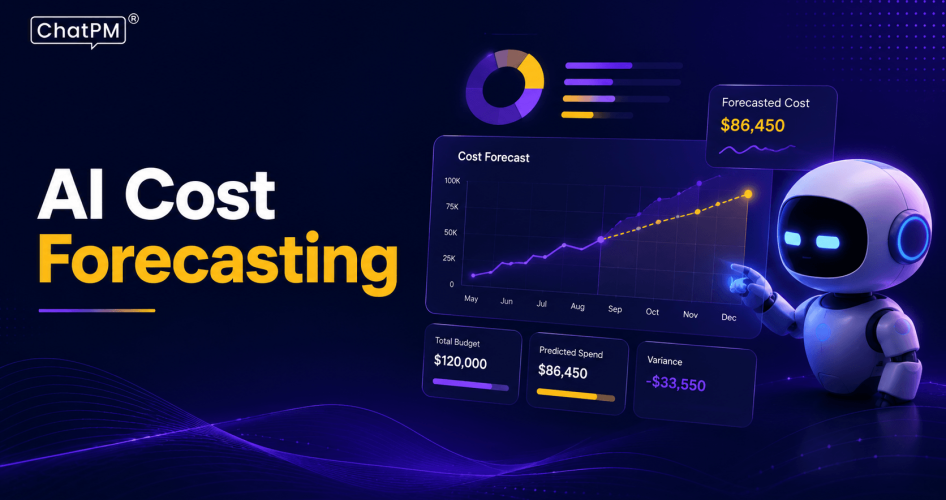
AI Cost Forecasting uses artificial intelligence to analyze project data and predict future costs. Instead of relying only on static estimates, it continuously evaluates historical and current information to identify spending patterns, financial risks, and potential changes in project expenses.
For mega infrastructure projects, this approach provides a more dynamic view of financial performance. In particular, AI can compare planned costs with actual spending and detect patterns that may indicate future budget pressure.
It can also combine information from schedules, procurement, labor, resources, and project progress. As a result, project teams can better understand how operational changes could influence overall project costs.
Traditional forecasting often depends on periodic updates and manual calculations. However, AI based forecasting can support continuous analysis, helping project leaders make timely decisions as project conditions change.
How AI Improves Budget Forecasting Across the Project Lifecycle?
AI supports financial planning by continuously analyzing project performance and spending data. As a result, teams can anticipate cost changes and respond before financial problems become significant.
1. Early-Stage Cost Estimation
AI analyzes historical project data to establish realistic initial cost estimates. For example, it considers similar projects, resources, timelines, and expected spending patterns to support more informed estimates.
2. Real Time Budget Monitoring
AI continuously compares planned spending with actual project expenditure levels. Therefore, teams can quickly identify financial deviations and investigate their underlying causes.
3. Cost Overrun Prediction
AI detects spending patterns that may signal future budget overruns. As a result, early warnings help project leaders take corrective action before costs escalate.
4. Forecasting Remaining Project Costs
AI evaluates current performance to estimate the costs required for completion. Consequently, these forecasts help teams adjust financial plans according to project progress.
5. Scenario Based Financial Planning
AI can evaluate how different project changes could affect costs. In addition, teams can compare financial outcomes before approving important project decisions.
Key Data AI Uses for Infrastructure Cost Prediction
Accurate forecasting depends on reliable data collected throughout the project lifecycle. Therefore, AI Cost Forecasting brings different project data sources together to generate clearer financial predictions.
1. Historical Project Costs
Past project costs help AI identify recurring spending patterns. As a result, this information provides useful benchmarks for forecasting future infrastructure expenses.
2. Procurement and Supplier Data
Procurement records reveal purchasing trends, supplier costs, and delivery patterns. Therefore, AI can analyze these details to anticipate future procurement expenses.
3. Labor and Resource Costs
Labor data shows workforce requirements, productivity levels, and associated expenses. In addition, AI uses these patterns to estimate future resource-related costs.
4. Material Prices
Material price data helps identify fluctuations affecting project budgets. As a result, AI can analyze historical changes to anticipate potential future price movements.
5. Project Schedules and Milestones
Schedules provide important information about project progress and resource requirements. Consequently, AI can connect delays with potential increases in project costs.
6. Change Orders and Scope Variations
Change orders can significantly affect planned project expenses and timelines. Therefore, AI analyzes these changes to understand their potential financial impact.
7. Actual Versus Planned Expenditure
Comparing planned and actual spending reveals financial performance throughout projects. As a result, AI can identify deviations and use them to improve future cost predictions.
8. Risk and Performance Data
Risk and performance information provides additional context for financial forecasting. In addition, AI can connect operational risks with potential changes in project costs.
How AI Cost Forecasting Supports Project Finance?
Financial decisions become easier when project teams have timely and reliable cost information. Therefore, AI based cost prediction helps leaders understand future financial requirements and manage project funding more effectively.
1. Improve Financial Planning
AI provides updated cost estimates based on current project performance. As a result, finance teams can plan funding requirements with greater confidence.
2. Strengthen Cash Flow Visibility
Forecasted expenses help teams understand upcoming financial commitments and payment requirements. Consequently, better visibility supports smoother cash flow planning throughout the project.
3. Support Funding Decisions
Accurate forecasts give stakeholders clearer information about future project expenses. Therefore, this helps organizations make informed decisions about funding allocation and financial priorities.
4. Manage Financial Risks
AI can identify spending patterns that indicate potential financial risks. As a result, early insights allow teams to address cost concerns before they become larger problems.
5. Prioritize Project Spending
Project leaders can use forecasted costs to evaluate spending priorities. In this way, available resources can be directed toward activities requiring immediate financial attention.
Challenges to Consider Before Adopting AI Cost Forecasting
AI can strengthen financial forecasting, but successful implementation requires strong data and governance. Therefore, organizations should address several practical challenges before relying on AI Cost Forecasting for major financial decisions.
1. Data Quality and Consistency
Inconsistent project data can reduce forecasting reliability. Therefore, teams need accurate, standardized, and regularly updated information.
2. System Integration
Forecasting tools must connect with existing project and financial systems. As a result, poor integration can create data gaps and limit useful insights.
3. Forecast Accuracy
AI predictions depend on the quality and relevance of available data. For this reason, teams should continuously evaluate forecasts against actual project outcomes.
4. Changing Project Conditions
Infrastructure projects can experience frequent changes in scope, schedules, resources, and costs. Consequently, forecasting models must adapt as project conditions evolve.
5. Data Security and Governance
Financial and project information requires strong access controls and governance. In addition, organizations should establish clear policies for data protection and responsible AI usage.
6. Human Oversight
AI forecasts should support professional judgment rather than replace it. Therefore, project and finance teams should review important predictions before making major financial decisions.
The Future of Cost Prediction in Infrastructure Projects
Infrastructure financial management is moving toward continuous forecasting and proactive decision making. As AI capabilities develop, they will increasingly connect project costs, schedules, resources, and risks to provide timely financial insights.
1. Continuous Cost Monitoring
AI will continuously evaluate project spending and financial performance. As a result, teams can respond faster when unexpected cost changes appear.
2. Integrated Financial Intelligence
Cost forecasting will increasingly connect with schedules, procurement, resources, and risks. Consequently, this creates a unified view of overall project financial performance.
3. Proactive Risk Management
AI will help identify financial risks before they significantly affect budgets. Therefore, project leaders can take corrective action earlier and reduce potential financial impact.
4. Smarter Scenario Planning
Advanced forecasting will allow teams to evaluate multiple potential project outcomes. As a result, this supports better decisions when conditions or project assumptions change.
Ready to Make Infrastructure Cost Forecasting More Predictable?
Mega infrastructure projects need accurate financial visibility to manage changing costs, risks, and project conditions. AI Cost Forecasting helps teams predict expenses, monitor financial performance, and make informed decisions throughout the project lifecycle. As a result, project leaders can respond to financial changes with greater confidence.
ChatPM helps project teams connect financial, schedule, resource, and risk information in one environment. With AI driven insights, teams can improve cost visibility, respond to financial changes faster, and make better decisions across complex infrastructure projects. In addition, this connected approach can give teams a clearer view of overall project performance.