Key Takeaways
- 01
AI identifies project risks before they become major issues. As a result, teams can respond earlier and reduce potential disruptions. - 02
Real-time monitoring improves risk visibility and response speed. In addition, teams can continuously track changing project conditions. - 03
Predictive analytics helps reduce delays, overruns, and disruptions. Therefore, organizations can address potential issues before they become more serious. - 04
AI supports proactive decision-making throughout project execution. As a result, teams can respond to emerging risks with greater confidence. - 05
Early risk detection increases project success and delivery confidence. Furthermore, continuous monitoring helps teams maintain better control throughout execution.
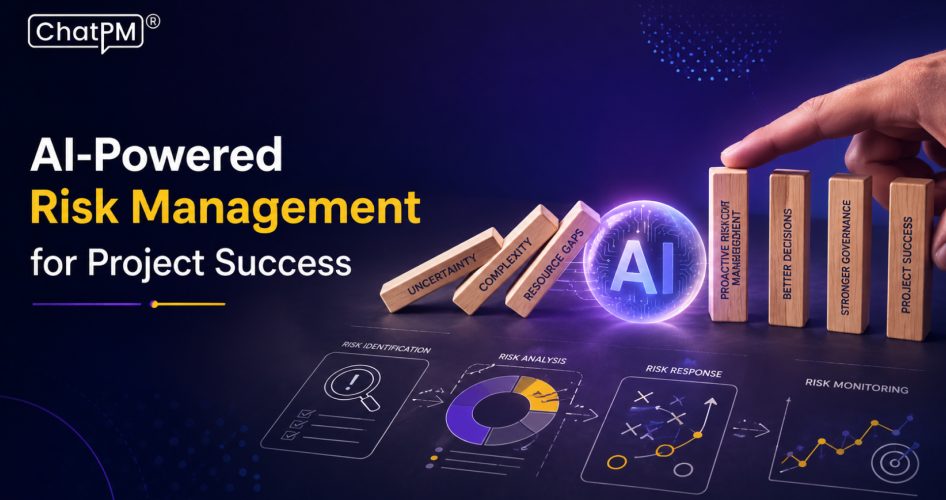
Projects rarely fail without showing warning signs during execution stages. However, teams often miss these signals while managing deadlines, resources, and priorities. As project complexity grows, identifying risks manually becomes increasingly difficult. AI-Powered Risk Management helps organizations detect threats early and respond faster. As a result, it turns project data into insights that support timely decisions.
Concerned about risks affecting delivery timelines and project performance outcomes? Then, this blog will help you understand a better approach. We will explore how AI predicts failures before they happen. In addition, you will learn how teams can reduce risks proactively. As a result, organizations can improve project outcomes and maintain delivery confidence.
Ready to move beyond spreadsheets and manual project tracking? Schedule a ChatPM Pro demo and see how modern project management can help your team achieve more.
What is AI-Powered Risk Management?
AI-powered risk management uses AI and machine learning to identify, assess, and reduce potential project risks. Instead of relying only on past experiences, it analyzes large volumes of project data to uncover patterns and warning signs. As a result, organizations can recognize possible issues early and make informed decisions before problems grow.
Artificial intelligence risk management combines predictive analytics, anomaly detection, and data analysis to monitor project performance continuously. For example, it can forecast schedule delays, budget concerns, and resource challenges using historical and real-time information. By providing early insights, it helps teams respond quickly and, therefore, maintain better control over project outcomes.
AI Risk Management Core Components
1. Data Aggregation & Processing: Combines project data from multiple sources for analysis. As a result, teams have a broader data foundation for identifying potential risks.
2. Predictive Analytics & Modeling: Forecasts risks using historical trends and project patterns. Therefore, teams can prepare for potential issues earlier.
3. Automated Monitoring & Alerts: Detects unusual activities and sends instant risk notifications. Consequently, teams can investigate potential problems more quickly.
4. Risk Governance & Explainability: Ensures transparent decisions and supports responsible risk oversight. In addition, this helps organizations maintain better visibility into risk-related decisions.
5. Regulatory Compliance Tracking: Monitors compliance requirements and identifies potential policy gaps. As a result, organizations can address compliance concerns before they become larger issues.
Why Traditional Risk Management Often Fails in Complex Projects?
Traditional risk management often struggles to keep pace with modern project complexity. This is why many organizations are adopting AI-powered risk management to identify risks earlier and improve project visibility. As project conditions change, continuous monitoring becomes increasingly important for maintaining effective risk control.
1. Over-Reliance on Static Planning
Traditional risk plans are often created only during project initiation. However, they can struggle to remain relevant when project conditions change frequently. As a result, risks that emerge later may not be reflected in the original plan.
2. The Silo Effect
Risks are often managed separately across teams and departments. Consequently, this can prevent organizations from understanding how individual issues may affect the entire project. In addition, limited information sharing can make coordinated risk response more difficult.
3. Ignoring Unknown Risks
Traditional approaches focus mainly on known and documented risks. However, they can fail to identify emerging threats before they create larger problems. Therefore, organizations may have less time to respond when unexpected risks appear.
4. Dependence on Fixed Estimates
Many risk assessments rely on assumptions and fixed timelines. However, real projects involve uncertainty that cannot be captured through single estimates. As a result, risk assessments may need to evolve as new project information becomes available.
5. Risk Management as a Formality
Risk registers are frequently treated as documentation requirements. In contrast, automated risk management supports continuous monitoring and actionable risk insights throughout execution. As a result, teams can respond to changing conditions rather than relying only on static documentation.
How Does AI-Powered Risk Management Predicts Project Failures Early?
Project failures are often preceded by patterns that teams may overlook. Intelligent Risk Management helps identify these warning signs early, enabling organizations to take corrective actions before project performance is affected. Therefore, AI-based monitoring can provide teams with additional visibility throughout project execution.
1. Hidden Pattern and Correlation Recognition
AI analyzes project data to uncover patterns that are often missed. As a result, this strengthens AI Risk Assessment by identifying issues before escalation. Furthermore, teams can use these insights to investigate potential concerns earlier.
2. Natural Language Processing and Sentiment Analysis
AI reviews project communications to detect engagement and clarity concerns. In addition, it identifies warning signs that may impact project progress. Consequently, teams can investigate communication-related issues before they affect project execution.
3. Automated Schedule Risk Analysis
AI evaluates schedule performance using real-time project information. As a result, it can predict delays and highlight milestone risks early. This gives teams more time to review dependencies and take corrective action.
4. Predictive Resource and Burnout Monitoring
AI tracks resource utilization and workload distribution continuously. Therefore, AI Risk Monitoring can help prevent bottlenecks and team burnout. In addition, teams can identify workload imbalances before they affect project delivery.
5. Dynamic Scope Creep Detection
AI compares actual project efforts against approved project baselines. As a result, it can quickly identify unauthorized changes affecting costs and timelines. This allows teams to review scope changes before they create larger project impacts.
6. Instant Mitigation and Contingency Generation
AI recommends response strategies when potential risks are detected. Consequently, teams can act faster using data-driven mitigation suggestions. In this way, risk response becomes more proactive throughout project execution.
What Project Risks Can AI Detect Before They Escalate?
Project risks often develop gradually before becoming major challenges. AI risk analytics helps organizations identify these risks early, enabling teams to take timely action and reduce potential project disruptions. Therefore, continuous risk monitoring can help teams respond before risks significantly affect delivery.
1. Schedule Delays
AI identifies delivery risks by analyzing task progress and dependencies. As a result, teams can address bottlenecks before they impact critical milestones. This gives project teams more time to adjust schedules and dependencies.
2. Budget Overruns
AI tracks spending patterns and highlights unusual cost variations. Consequently, this helps organizations control budgets before expenses increase significantly. In addition, early visibility allows teams to review the causes of unexpected cost changes.
3. Resource Burnout and Bottlenecks
AI monitors workloads to identify overloaded or underutilized resources. As a result, Enterprise AI Risk Management helps maintain balanced team performance. Furthermore, teams can address resource constraints before they become delivery bottlenecks.
4. Communication and Scope Creep Risks
AI analyzes project communications to detect requirement changes early. Therefore, it helps prevent unauthorized work from affecting timelines and budgets. In addition, early detection gives teams an opportunity to review scope changes before approving additional work.
5. Integration and Quality Failures
AI tracks quality metrics and dependency-related project risks. As a result, teams can identify and resolve potential issues before they impact final delivery.
Common Challenges When Adopting AI for Risk Management
1. Data Quality and Governance: Poor data quality reduces prediction accuracy and reliability. Therefore, organizations need reliable project data to support useful AI-based risk analysis.
2. Lack of Transparency: Complex models make decision processes difficult to explain. As a result, organizations may need clear processes for understanding and reviewing AI-generated insights.
3. Algorithmic Bias and Discrimination: Historical biases can influence AI-generated project assessments. Consequently, organizations should review AI outputs carefully and maintain appropriate oversight.
4. Integration with Legacy Systems: Older systems create compatibility and implementation challenges. In addition, connecting different systems may require additional technical planning and support.
5. High Costs and Talent Gaps: Adoption requires investment, expertise, and ongoing support. Therefore, organizations should consider implementation requirements when introducing AI-powered risk management.
Ready to Identify Project Risks Before They Impact Delivery?
Project success depends on how quickly teams can identify and respond to emerging risks. As projects become more complex, traditional approaches often struggle to provide the visibility needed for timely decisions. AI-Powered Risk Management helps organizations move beyond reactive planning by detecting warning signs early, improving risk visibility, and supporting better project outcomes. As a result, teams can respond to potential issues with greater awareness throughout project execution.
Organizations that adopt intelligent risk management practices are better positioned to reduce delays, control costs, and improve resource utilization. In addition, they can make more informed decisions using real-time project insights instead of relying solely on historical data. Platforms like ChatPM take this a step further by combining AI-driven project intelligence, risk monitoring, and predictive insights in one environment. As a result, teams can identify potential project risks earlier, act faster, and maintain greater confidence throughout the project lifecycle.