
Key Takeaways
- 01
The right management style directly impacts team productivity and project outcomes. - 02
Flexible leadership helps teams adapt quickly without losing focus or momentum. - 03
Inclusive and supportive styles reduce burnout and improve long-term team commitment. - 04
Different project situations call for different leadership approaches and decisions. - 05
Clear leadership direction keeps teams accountable, collaborative, and consistently delivering results.
Management styles describe how managers communicate, make decisions, delegate responsibilities, provide feedback, and lead their teams. Different management styles can affect team collaboration, productivity, employee engagement, and project outcomes.
Strong leadership is no longer about control alone. Today’s project environments demand clarity, adaptability, and trust to handle fast change and complex goals. Understanding different management styles helps leaders guide teams effectively, improve collaboration, and align daily execution with long-term objectives in a structured and thoughtful way.
Modern project teams work across tools, time zones, and expectations, making leadership approach more critical than ever. Choosing the right style can influence productivity, morale, and delivery outcomes. Clear alignment between leaders and teams creates consistency and confidence in execution. In this blog, we will explore how different project management styles fit modern project teams and when to use them. Keep reading further!
Looking for a smarter way to manage your project team? Schedule a ChatPM Pro demo and see how AI helps modern teams collaborate and deliver better results.
What are Project Management Styles and Why Do They Matter in Modern Projects?
Management styles refer to the different ways managers lead, guide, and support their teams at work. While core responsibilities remain the same, each leader applies their skills differently – some lean on structure and oversight, others on collaboration and trust. These approaches shape how managers communicate, motivate employees, and drive performance through everyday decisions and actions.
In project-focused environments, leadership approach directly affects planning, collaboration, and outcomes. Management styles in project management influence how goals are set, feedback is shared, and challenges are handled. Poor leadership remains one of the leading causes of project failure, which is what makes choosing the right style so important. Recognizing your natural approach helps improve team trust, clarity, and overall project experience.
Why Do Project Management Styles Matter in Modern Projects?
1. Built for Change
Modern projects evolve quickly, making flexibility essential. The right management styles allow leaders to respond to changing requirements without disrupting progress or team focus.
2. Higher Team Engagement
Leadership approach strongly affects motivation and retention. Supportive and inclusive management styles in business help teams feel valued, reducing burnout and improving long-term commitment.
3. Stronger Team Collaboration
Clear and open leadership encourages cross-functional teamwork. Teams collaborate more effectively when communication flows easily, and roles are aligned around shared goals.
4. Better Use of Resources
Thoughtful leadership helps avoid wasted effort. Teams can focus on high-value work while aligning time, skills, and budgets with strategic priorities.
5. Faster Decision Making
Modern projects rely on timely decisions. Data-aware leadership enables quicker responses while keeping teams aligned and confident.
6. Consistent Project Outcomes
Clear leadership direction improves delivery reliability. Teams stay focused, accountable, and productive even in complex or fast-moving project environments.
What are the Different Types of Project Management Styles?
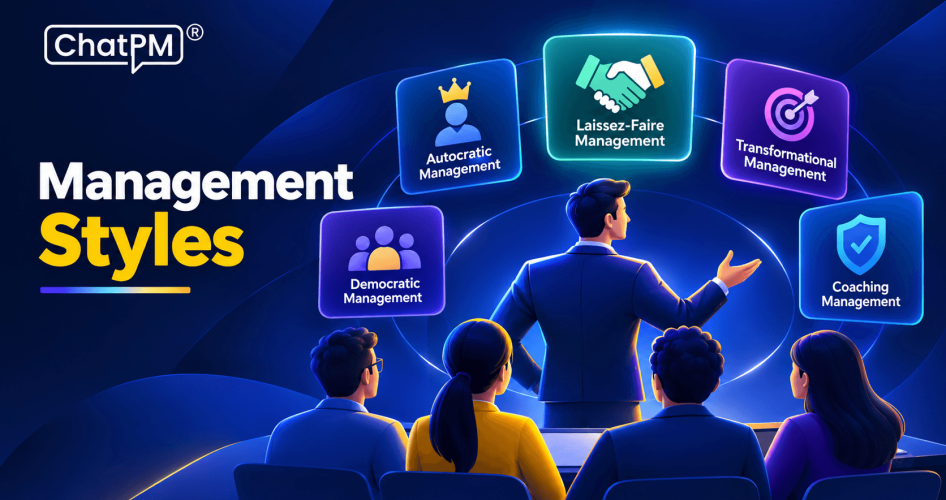
Understanding how leaders guide and support their teams begins with recognizing the variety of approaches used in today’s workplaces. Different management styles reflect how decisions are made, how communication flows, and how managers motivate teams to achieve consistent and effective results.
1. Autocratic / Authoritarian
This style centralizes decision-making with the manager and involves close supervision of tasks. It works well in high-pressure situations but can limit creativity and employee ownership if used too often.
2. Democratic / Participative
Managers actively involve team members in decisions and encourage open communication. This approach improves engagement, trust, and accountability within modern teams.
3. Laissez-Faire / Free-Rein
Leadership takes a hands-off approach, allowing teams to manage their own work and goals. It is effective for experienced, self-driven professionals who require minimal supervision.
4. Coaching
The manager focuses on skill development, regular feedback, and long-term growth. Tasks are connected to individual strengths and career goals for sustained performance.
5. Transformational
Leaders motivate teams through inspiration, purpose, and a shared vision for change. Among different management styles, this approach encourages innovation and continuous improvement.
6. Paternalistic
Managers prioritize employee well-being while maintaining authority in decision-making. When balanced well, it builds loyalty, but excessive control can feel limiting.
7. Affiliative
This style emphasizes relationships, trust, and emotional connection within the team. It is especially useful for rebuilding morale and strengthening collaboration.
8. Visionary
Leaders define a clear direction and inspire teams to work toward future goals. This approach aligns well with innovation-driven environments and long-term strategy.
9. Transactional
Performance is guided by clear rules, rewards, and consequences. In structured environments, different management styles like this help maintain consistency and efficiency.
How ChatPM Supports Different Project Management Styles?
Choosing the right leadership approach plays a critical role in how modern projects succeed. Effective project management leadership styles help managers maintain clarity, support collaboration, and respond to change while keeping teams focused on shared goals and measurable outcomes.
ChatPM helps translate leadership decisions into structured action by supporting the right team structure for project management. With real-time visibility, intelligent workflows, and clear alignment, it enables leaders to apply their management approach consistently while guiding teams toward predictable and high-quality project results.