Key Takeaways
- 01
A project manager portfolio shows skills, projects, and real impact clearly. - 02
Even without experience, portfolios prove ability through practical work examples. - 03
Focus on quality projects and clearly explain your approach and results. - 04
Keep your portfolio simple, relevant, and easy to access and understand. - 05
Regular updates and avoiding mistakes help maintain a strong portfolio.
Starting a career in project management can feel like a puzzle, especially when you have little to no experience. A well-crafted project manager portfolio can be your secret weapon, helping you showcase potential, skills, and initiative even before you step into your first formal role.
Creating a portfolio might seem daunting at first, but it’s more about strategy than history. By focusing on what you can demonstrate and how you present it, you can make a strong impression on employers and mentors. This blog will walk you through the steps to start building yours with confidence. So, let’s begin!
Stop spending hours on repetitive project management tasks. Book a ChatPM Pro demo to discover how AI can automate workflows, simplify project coordination, and free your team to focus on high-impact priorities.
What is a Project Manager Portfolio?
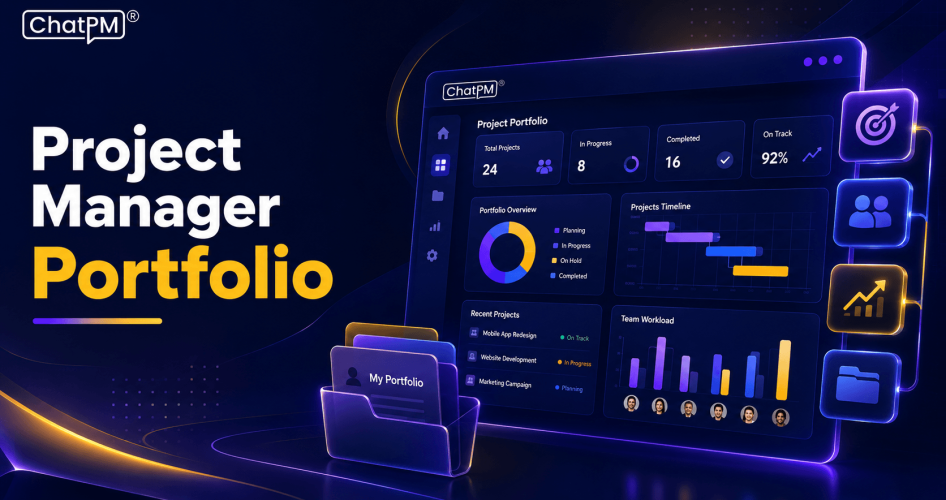
A project manager portfolio is a collection of your most meaningful projects and achievements. It highlights tasks you successfully completed, challenges you overcame, and results you helped deliver. This helps others see your progress along your project manager career path.
Your best work includes projects where you made a noticeable impact. It can be leading a small team, improving processes, meeting deadlines, or solving problems efficiently. The portfolio shows your skills, decision-making, and contributions, giving employers or mentors a clear picture of your abilities.
Key Components Include:
1. Professional Biography Resume
2. Project Case Studies
3. Work Samples Deliverables
4. Key Skills Competencies
5. Certifications Education Proof
6. Lessons Learned Reflection
7. Metrics ROI Results
Free Project Manager Portfolio Template
Create your project manager portfolio faster with our simple portfolio template. Use it to showcase your projects, responsibilities, skills, achievements, and measurable results.
Can a Project Manager with No Experience Have a Portfolio?
Yes, a project manager with no formal experience can and should have a portfolio. It serves as clear proof of your skills and effort. You can include work from academic projects, volunteering, side projects, or contributions from non-project roles.
The focus should be on transferable skills such as leadership, organization, communication, and tool usage. By showing real examples and results, you help others understand your potential and how you can add value, even without formal experience.
Here are the reasons why it is important to have one:
1. Shows Your Real Skills
It gives clear proof of what you can do, even without a formal job title. Employers can see your abilities through actual work instead of only relying on qualifications.
2. Highlights Transferable Skills
It shows how your past experiences connect to project management. Skills like planning, communication, and organization become easy to understand in a practical context.
3. Explains Your Work Approach
It helps others see how you plan, manage risks, and solve problems. This is important for those learning how to become a project manager and wanting to show their working style.
4. Reflects Your Initiative
Creating a portfolio shows you are proactive and serious about your career. It proves you are willing to put in an effort to learn and grow in project management.
Steps to Create a Project Manager Portfolio with No Experience
Building a strong portfolio for project manager roles may seem challenging at first, but it becomes easier with a clear approach. By following the right steps, you can create a portfolio that reflects your skills, effort, and potential effectively.
Step 1: Start Without Waiting
You do not need a formal role to begin building your experience. Start with small projects, practice tasks, or real-life problem solving to develop your skills. Taking action early helps you learn faster and builds confidence over time.
Step 2: Focus on Quality Projects
Instead of creating many projects, choose a few that clearly show your abilities. Pick examples where you planned, organized, or improved a process. Strong and meaningful projects leave a better impression than a long list of basic work.
Step 3: Explain Your Approach Clearly
Do not just present the final result of your work. Describe the problem, your plan, the steps you followed, and the outcome you achieved. This helps others understand how you think and how you handle responsibilities.
Step 4: Make Your Work Easy to Access
Your projects should be simple to view and understand. Use platforms or a personal website to present your work in a clear and organized way. Easy access increases your chances of being noticed by recruiters or mentors.
Step 5: Write in a Natural Way
Avoid using overly formal or generic statements in your portfolio. Explain your projects in simple words and share your real reasons behind them. This makes your work more genuine and easier for others to connect with.
Step 6: Add a Strong Personal Introduction
Include a short section that explains who you are and what you aim to achieve. Talk about your interest in project management and your current learning journey. This gives direction and purpose to your project manager portfolio.
Step 7: Show Growth and Learning
Your portfolio does not need to be perfect to be effective. Focus on what you learned from each project and how you improved your approach. Showing progress reflects your willingness to grow and adapt.
Step 8: Improve Visibility with Keywords
Use simple and relevant keywords to make your portfolio easier to find online. This helps recruiters or hiring managers discover your work when searching for fresh talent. A well-optimized portfolio improves your reach and opportunities.
Step 9: Keep Your Portfolio Updated
Your portfolio should evolve as you gain more experience and knowledge. Add new projects, refine old ones, and improve your presentation regularly. Consistent updates show dedication and long-term commitment to your career.
Watch Out for Mistakes to Avoid
1. Avoid duplicating resume content
2. Exclude irrelevant or excessive details
3. Include clear measurable project outcomes
4. Use simple and professional language
5. Update portfolio regularly and consistently
Build Your Project Manager Portfolio with Confidence
Building a strong project manager portfolio without experience is not only possible but also highly valuable for your career growth. It allows you to present your skills, thinking process, and ability to manage tasks effectively. With the right approach, even small projects can create a meaningful impact.
As you continue to learn and improve, your portfolio becomes a reflection of your progress and potential. Staying consistent and updating it regularly will help you stand out in competitive environments. With tools like ChatPM, you can plan better, organize tasks efficiently, and strengthen your project management approach. ChatPM supports your journey by helping you apply practical project management skills with confidence.
Schedule Your Demo