Key Takeaways
- 01
AI project management agents think and act independently, making them far more capable than traditional PM tools. - 02
They cover the full project lifecycle, from planning and scheduling to risk detection and progress tracking. - 03
Early risk detection helps teams address delays and budget concerns before they escalate. - 04
They offer proactive insights by connecting data across multiple platforms, unlike static traditional tools. - 05
Benefits are significant, but trust, skill gaps, and data privacy remain key challenges to address. - 05
Starting small, defining clear boundaries, and training teams is the best way to adopt AI PM agents.
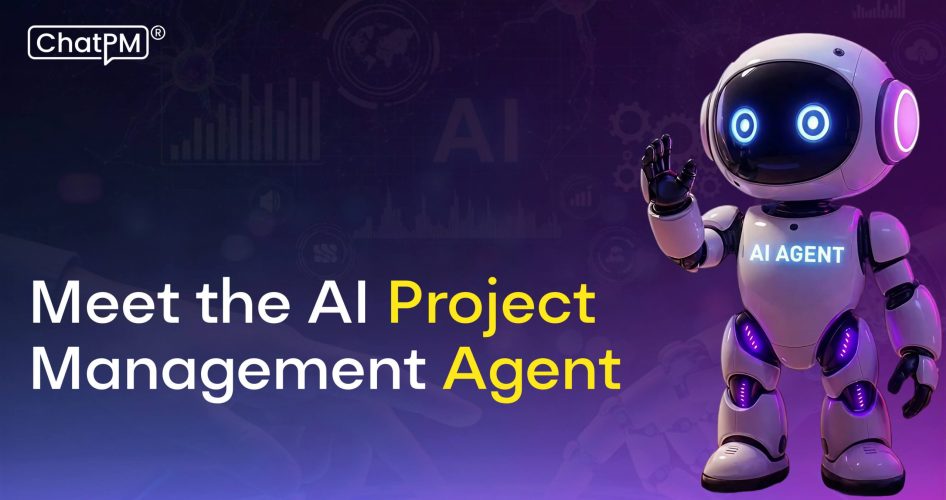
Projects keep moving at a faster pace in this busy world with deadlines being shortened and smooth management becoming a bigger challenge. Besides, teams are continuously handling many tasks, tools, and even expectations simultaneously. It makes project management look like an overloaded and unmanageable thing. However, this is the point where an AI project management agent can help.
For many project managers, this feels like the kind of solution they have been looking for. But how does it actually work, and what makes it different from the tools you already use? Through this blog, you will be able to get a clear and simple understanding of an AI agent for project management. So, keep reading further!
What is an AI Agent Project Management?
AI project management agents are intelligent systems that can understand what is happening in a project, think about it, and take actions on their own. They do not require instructions to operate unlike simple tools, and can track progress, locate problems and assist in completion with little manual input by teams.
They are integrated into your workflows in project management to process tasks such as identifying delays, workloads, and real-time information updates. Using technologies like machine learning and natural language processing, they learn from past data, understand context, and keep improving how they support projects over time.
- The global AI in project management market is valued at USD 2,530.0 million in 2023, expected to reach USD 7,717.2 million by 2030.
- 88% of organizations use AI in at least one function, with 32% applying it directly to project management workflows.
- 64% of organizations using AI report projects meeting or exceeding ROI.
What are the Key Abilities of an AI Agent in Project Management?
To understand the AI agents in a better way, it is important to have a look at what it can do in real project scenarios. Below are the key abilities that define its role in project management.
1. Smart Project Planning
An AI project management agent can create complete project plans using past data, templates, or simple instructions. It quickly sets timelines, assigns tasks, and defines dependencies without starting from scratch.
2. Real-Time Progress Monitoring
It monitors the project progress and maintains all the updates at a single location. This enables teams to remain up-to-date without maintaining dashboards and reports manually.
3. Early Risk Detection
The agent monitors potential risks such as postponements, workload problems, or budget problems. It creates awareness among teams at an early stage to ensure that they can deal with issues before they escalate.
4. Predictive Insights
It is able to anticipate delays or missed deadlines by analyzing past performance and current trends. This will enable teams to plan rather than act at the last moment.
5. Seamless Team Coordination
It links various teams and the flow of work across departments. The tasks are updated, re-allocated, and monitored without misunderstandings and delays.
6. Efficient Resource Management
It calculates the capacity of the team and allocates work according to the availability and priority. This will prevent overloading and will make sure that tasks are addressed by the appropriate individuals.
7. User Story Creation
It has the ability to transform ideas, notes or discussions into well defined and structured user stories. This minimizes confusion and assists the teams to grasp requirements more quickly.
8. Meeting Support
The agent assists in agenda preparation, summarization of discussions and following up. It makes sure that meetings result into definite actions without additional manual work.
How are AI Project Management Agents Better Than Traditional PM Tools?
Conventional project management tools have assisted teams in being organized but they tend to be very manual with continual updating. These tools may fail to manage dynamic changes and real-time decision-making as the complexity of the projects increases.
AI project management agents introduce a more sophisticated method by minimizing the manual work and adjusting to the project requirements as they change. The following comparison shows how they provide a smarter and more efficient method of handling projects.
| Aspect | Traditional PM Tools | AI Project Management Agents |
|---|---|---|
| Core Function | Task tracking, scheduling, and reporting | Intelligent monitoring, decision-making, and execution |
| Automation | Rule-based automation within predefined limits | Context-aware automation with multi-step actions |
| Data Handling | Works within a single tool or ecosystem | Connects and uses data across multiple platforms |
| User Dependency | Requires frequent manual updates and inputs | Operates with minimal input using real-time data |
| Insights | Provides reports after data is entered | Generates proactive insights and recommendations |
| Response to Delays | Alerts when deadlines are near | Detects risks early and suggests corrective steps |
| Adaptability | Static workflows | Dynamic workflows that adjust automatically |
| Ecosystem | Often limited to specific tools (e.g., Jira, Asana) | Works best in integrated environments with unified data |
What are the Advantages and Disadvantages of AI Project Management Agent?
Every tool has two sides, and AI project management agents are no different. While the advantages are hard to ignore, there are also real challenges that teams need to think through before jumping in.
Let’s break down both advantages and disadvantages:
Advantages At a Glance
1. Accelerated Project Planning
AI agents help create schedules and plans faster than traditional methods. Teams can start executing sooner and save valuable time.
2. Enhanced Decision Support
Using real-time and historical data, agents help identify risks and optimize resource use. This leads to smarter, more informed decisions.
3. Improved Accountability
The agent tracks team progress and sends reminders for upcoming tasks. It keeps everyone responsible without constant manual follow-ups.
4. Error Reduction
Routine updates and repetitive tasks are handled by the agent. This reduces human mistakes and ensures more accurate project results.
5. Streamlined Collaboration
Agents make it easy to share updates and coordinate across teams. Communication becomes smoother and more efficient.
6. Cost Optimization
By reducing errors and improving resource allocation, projects run more efficiently. This helps lower overall operational costs.
Disadvantages at a Glance
1. Trust Issues: Teams may take time to rely on AI agents for decision-making. They need proof that AI supports goals without causing disruption.
2. Skill Gaps: Even easy-to-use tools need some AI knowledge. Teams may need training in prompts, data use, and workflow setup.
3. Data Privacy Concerns: AI agents access sensitive project data, requiring strict security and compliance. Mishandling can create serious risks.
4. Job Worries: Some team members fear AI could replace roles. Clear communication is needed to show AI enhances human work, not replaces it.
How Can Managers Adapt AI PM Agents?
The use of AI PM agents is transforming the team dynamics and decision-making processes. Managers should be aware of this change and make plans on how the change will affect their projects and processes.
- Review workflows to identify repetitive tasks suitable for AI support.
- Begin with simple processes and then progress to complex ones.
- Define clear boundaries between AI actions and human decisions.
- Train employees on the usage of AI and its practical value.
- Monitor performance regularly and adjust AI setup based on feedback.
Popular AI Project Management Agents in 2026
1. ChatPM Pro
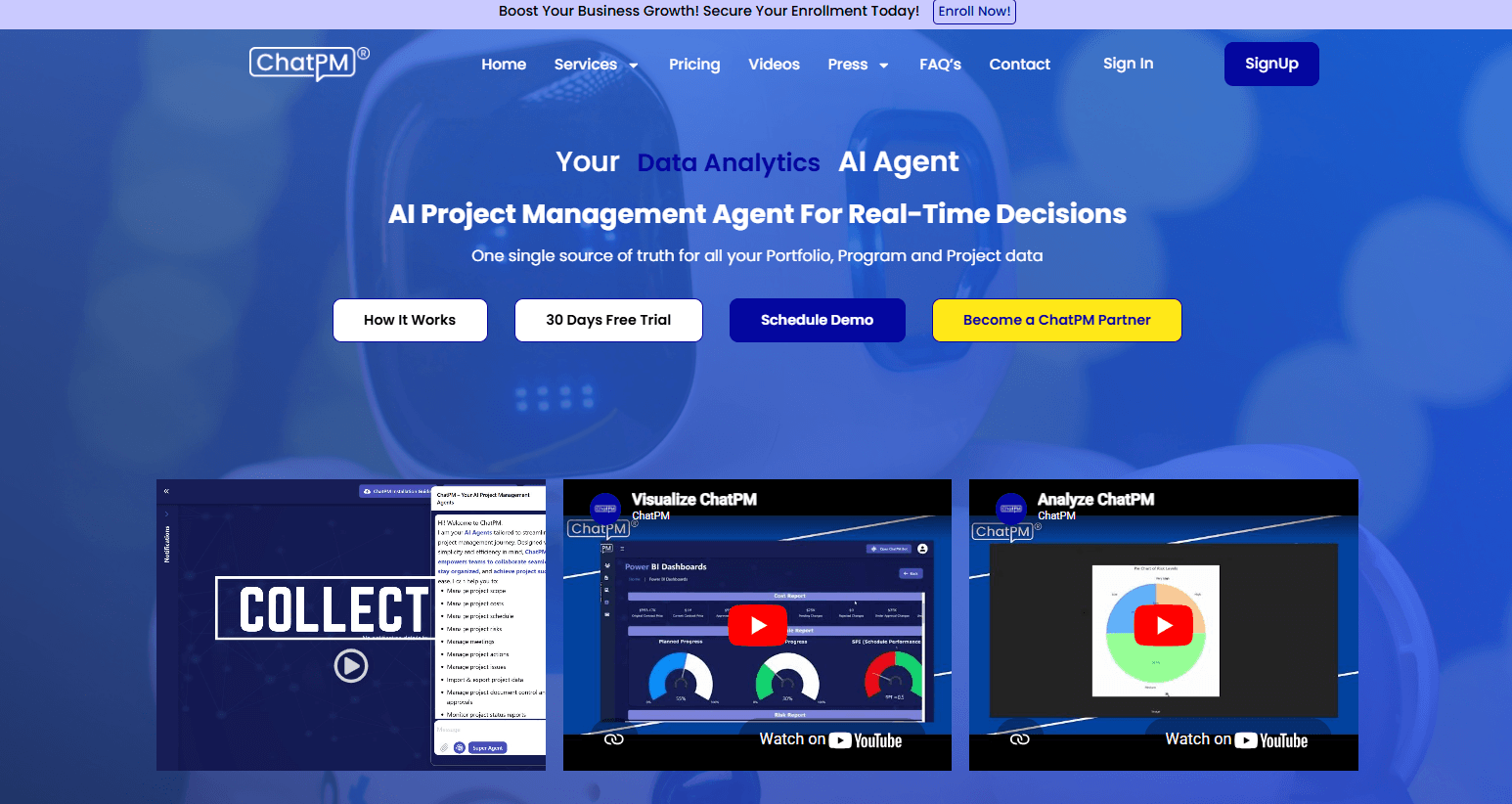
ChatPM Pro makes project management feel simple and intuitive. Powered by AI, it helps you stay on top of tasks while giving you real-time insights to make better decisions.
With built-in PowerBI dashboards and smooth Azure integration, you get a clear view of your projects without the usual hassle. Whether you’re working with a small team or handling large-scale operations, everything stays organized in one place. It’s designed to save time, reduce confusion, and keep your team moving forward.
Try ChatPM Pro free for 30 days now and see the difference for yourself.
2. Asana AI
3. Wrike
4. ClickUp AI
5. Trello AI Assistant
6. Monday.com AI
Streamline Your Projects with AI Agents for PMO
The AI project management agents are changing the way teams process projects by making planning, tracking and decision making easier. They minimize repetitive tasks, enhance teamwork, and assist in risk anticipation that enables projects to be conducted smoothly. These agents are taking center stage and becoming crucial to PMOs who want to execute their projects smarter, faster, and more efficiently.
ChatPM is a powerful platform that helps to introduce AI project management agents into routine workflows. ChatPM AI Agent automates the monotonous work, offers real-time insights, and assists in smarter decisions, keeping the teams focused, aligned, and productive. It also improves the overall project performance without interfering with current processes.