Key Takeaways
- 01
Waterfall works best when scope and requirements are fixed upfront. - 02
Agile thrives in environments where priorities shift and change frequently. - 03
No methodology is superior; the right fit depends on your project. - 04
Continuous testing in Agile catches issues before they become costly problems. - 05
Hybrid project management blends both approaches for maximum team efficiency.
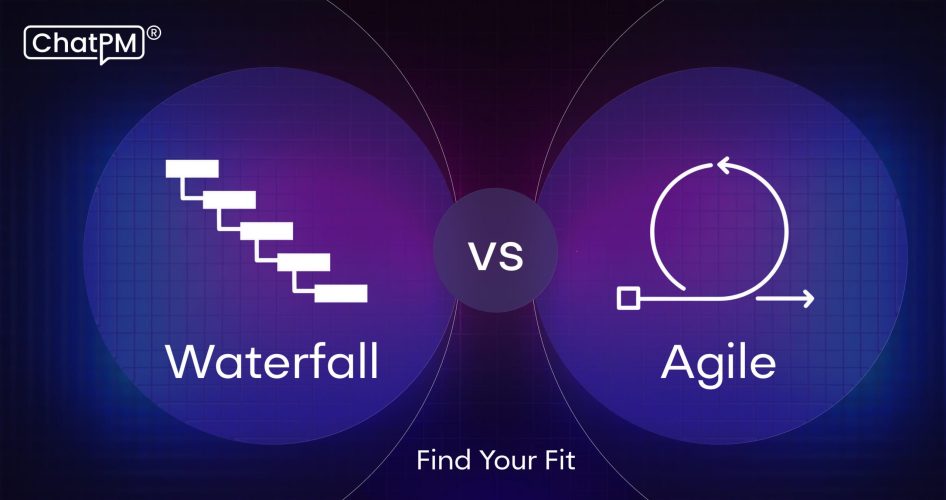
Delivering projects on time and within budget has always been the benchmark, but as teams scale and stakeholder expectations grow more complex, choosing between waterfall vs agile becomes one of the most consequential decisions a project manager can make. Both methodologies have proven track records, yet each serves fundamentally different project environments, team structures, and risk tolerances.
But how do we create a real-time framework for making that call without second-guessing every sprint or phase gate? Do not worry, we got you covered. In this blog, we break down both approaches side by side, so you walk away knowing exactly which one fits your team, your deliverables, and your next project cycle.
What is Waterfall Project Management Methodology?
Waterfall methodology is a linear project management workflow where each phase must be completed before the next one begins. It moves sequentially through five stages: requirements, design, implementation, verification, and maintenance. Every phase depends on the deliverables of the previous one, leaving no room for overlap or iteration.
When comparing waterfall vs agile, the core difference comes down to structure. Waterfall locks the project scope upfront, meaning any bugs or changes discovered mid-process cannot be addressed until the current phase closes. This makes it a high-discipline approach, best suited for projects where requirements are fixed and well-defined from the start.
Key Advantages of Waterfall Methodology
When requirements are clear and timelines are fixed, the waterfall methodology consistently delivers. The following are the key advantages of the waterfall methodology that make it a strong fit for the right projects.
1. Defined Project Structure
Rigorous upfront planning removes ambiguity from the entire process. Every team member knows the end goal and their role in reaching it.
2. Predictable Costs and Timelines
Time and budget are estimated and locked in before work begins. This gives stakeholders full financial visibility from day one.
3. Stronger Risk Management
Detailed planning surfaces potential design flaws before any execution starts. Teams can address problems early without disrupting the entire project.
4. Easier Progress Tracking
Less cross-functional dependency makes it simpler to measure progress at each phase. A Gantt chart alone can give you a complete project overview.
5. Clear Accountability at Every Stage
Each phase carries its own goals, milestones, and ownership. Teams know exactly what they are responsible for and when.
6. A Replicable, Scalable Process
A successful waterfall project management methodology becomes a repeatable blueprint for future work. Teams can apply the same structure to projects with similar requirements.
Limitations At a Glance
1. Rigid phase structure makes it difficult to accommodate changing requirements.
2. A single issue can halt the entire project’s forward progress.
3. Clients have little to no involvement once execution begins.
4. Minimal feedback during build often leads to costly post-launch revisions.
What is Agile Project Management Methodology?
Agile methodology is an iterative approach to project management that breaks work into smaller, manageable phases with continuous delivery and improvement at its core. Cross-functional teams collaborate closely, adapt to changes in real time, and self-organize around tasks. It prioritizes open communication, teamwork, and fast feedback over rigid upfront planning.
When looking at waterfall vs agile, the shift is clear. Agile does not lock requirements in from the start. Instead, it welcomes change at every stage, allowing teams to respond to new information without derailing the entire project. This makes it a natural fit for dynamic environments where priorities evolve frequently.
Key Advantages of Agile Methodology
For teams working in environments where priorities shift and client feedback matters throughout, Agile methodology is built for exactly that. The following are the key advantages of Agile methodology and why more teams are moving toward it.
1. Faster Delivery
Teams release functional product versions early and gather real feedback. This keeps development grounded in actual user needs from the start.
2. Built-in Flexibility
Short sprints allow teams to shift priorities without starting over. Agile handles change without throwing the entire project off course.
3. Better Product
Quality Continuous testing within each sprint catches issues before they compound. Teams fix problems early rather than discovering them at launch.
4. Lower Project
Risk Iterative cycles give teams visibility into obstacles well before they escalate. Problems get addressed in real time, not after the damage is done.
5. Stronger Client Collaboration
Stakeholders stay involved throughout the project, not just at the start. Regular progress reviews keep the final output aligned with actual expectations.
6. Higher Team Productivity
Self-organizing teams take ownership of how the work gets done. This builds accountability, improves communication, and keeps morale consistently high.
Limitations At a Glance
1. Changing requirements often lead to undefined timelines and scope creep.
2. Continuous collaboration demands significant time commitment from all stakeholders involved.
3. Iterative cycles make it hard to predict final project costs.
4. Agile loses effectiveness quickly when scaled across large, complex teams.
Waterfall vs Agile: Key Differences
Choosing the right methodology is not just a process decision; it shapes how your entire team works. Agile vs waterfall project management represents two distinct philosophies around planning, execution, and flexibility. The following are the key differences worth knowing before you commit to either approach.
1. Planning
Waterfall maps out every requirement and objective in detail before work begins. Agile plans continuously, adjusting priorities as new information surfaces throughout the project.
2. Flexibility
Waterfall resists change once the project scope has been defined and approved. Agile welcomes shifting requirements and adapts quickly without disrupting the entire workflow.
3. Project Roles
Waterfall assigns fixed roles with clearly defined responsibilities for each team member. Agile encourages collaboration across functions, allowing teams to self-organize around the work.
4. Delivery
Waterfall releases the final product only after every phase has been completed. Agile delivers working output at the end of each iteration or sprint.
5. Testing
Waterfall reserves testing for specific milestones, typically toward the end of the project. Agile tests continuously within each sprint, catching and resolving issues early on.
6. Speed
Waterfall moves slower because all requirements must be finalized before development starts. Agile delivers faster through short, focused development cycles that build momentum quickly.
Let us have a look at the comparison table to fully understand the difference between waterfall vs agile:
| Factor | Waterfall | Agile |
| Approach | Linear and sequential, phase by phase. | Iterative, built in short sprint cycles. |
| Planning | All upfront before work begins. | Continuous, adjusted as the project evolves. |
| Flexibility | Low. Changes mid-project are costly. | High. Adapts quickly to new requirements. |
| Delivery | Single release at project completion. | Working output delivered each sprint. |
| Client Input | At the start only, with limited post-kickoff involvement. | Ongoing feedback throughout every sprint. |
| Testing | Done at the end, after full build. | Continuous, embedded in every cycle. |
| Team Roles | Fixed, clearly defined per phase. | Cross-functional, self-organizing teams. |
| Risk | Higher, since issues often surface late. | Lower, because problems are caught early in sprints. |
| Documentation | Comprehensive and maintained throughout. | Lightweight, with priority on working software. |
| Best For | Fixed scope, clear requirements, and set deadlines. | Evolving needs, fast timelines, and active client collaboration. |
Ready to Choose the Right Methodology for Your Team?
Choosing between Waterfall vs Agile is not about picking the better methodology. It is about understanding your project, your team, and your delivery expectations. Both have proven strengths, and the right choice always comes down to how well the approach fits your specific requirements and working environment.
Most real-world projects rarely fit neatly into one box, which is why hybrid project management is gaining serious ground across industries. Blending structure with flexibility gives teams the best of both worlds without the trade-offs. Whether you lean Waterfall, Agile, or somewhere in between, having the right tools makes all the difference. That is exactly where ChatPM comes in, built to support your project workflow no matter which methodology you run.
Frequently Asked Questions
1. Can Waterfall and Agile be used together?
Yes, many teams run a hybrid model where Waterfall handles the overall structure and Agile manages execution. It gives you planning discipline without sacrificing flexibility where it matters.
2. Which methodology works better for remote teams?
Agile tends to work better for remote teams because of its emphasis on regular check-ins, sprint reviews, and continuous communication. Waterfall can work too, but only if documentation and handoffs are airtight.
3. Is Agile only for software development?
Not at all. Agile is now widely used in marketing, product, operations, and even HR. Any team that deals with changing priorities and needs fast feedback can benefit from it.
4. How long does a typical Agile sprint last?
Most sprints run between one to four weeks, with two weeks being the most common. The length depends on the team size, project complexity, and how frequently stakeholders need to review progress.
5. Which methodology is easier for new project managers to learn?
Waterfall is generally easier to pick up because of its straightforward, step-by-step structure. Agile has a steeper learning curve since it requires strong facilitation skills and a shift in how teams think about planning.